What It Is (posts below left; rate sheet, client list, other stuff below right)

My name is Bob Land. I am a full-time freelance editor and proofreader, and occasional indexer. This blog is my website.

You'll find my rate sheet and client list here, as well as musings on the life of a freelancer; editing, proofreading, and indexing concerns and issues; my ongoing battles with books and production; and the occasional personal revelation.

Feel free to contact me directly with additional questions: landondemand@gmail.com.

Thanks for visiting. Leave me a comment. Come back often.

Showing posts with label Ulysses. Show all posts

Tuesday, August 28, 2012

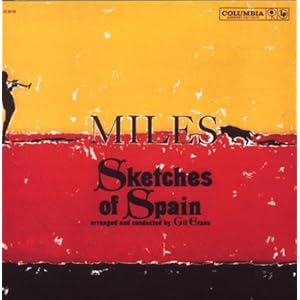
Sketches of Ulysses, 3

From Wikipedia: The Rolling Stone Album Guide calls it “a work of unparalleled grace and lyricism.” In 2003, the album was ranked number 356 on Rolling Stone’s list of the 500 greatest albums of all time.


I call it virtually impossible to leave playing for five minutes.

For me to say that any music is unlistenable is quite the achievement on the part of the composer, arranger, conductor, and musicians. With few exceptions I can sit through just about anything.

Exceptions: Opera and Led Zeppelin, both of which I’ve always lumped in the same category — they’re great until the singing starts.

I’d heard that Ulysses was one of the great unread novels of all time, the kind of literature that people like to say they’ve plowed through in order to impress other people, but which no one has actually read from beginning to end.

Maybe that was Finnegans Wake. Or Pynchon’s Gravity’s Rainbow.

My Boyz (as opposed to my sons) were dragged with me through elements of my Ulysses work, whether they wanted to be or not.

[First, let me say that my Boyz are vastly, vastly better educated and well-read than I am. Giants and geniuses all.]

Beast told Scooter, “You should read it. It’s not that difficult (no more so than Absalom Absalom or Gravity’s Rainbow).”

Strongboy piped in, “I tried [Gravity’s Rainbow] recently and couldn’t locate a major plot—or a minor one—by about page 50 and aborted. I like to be challenged as a reader, but a little positive reinforcement for the effort would be nice, too.”

Paisan, resident polymath, responded quickly, “One plot starts at the White Visitation, where the behaviorist Pointsman is studying Tyrone Slothrop because he gets a hard-on and screws a British gal BEFORE the V2 rockets hit that London locale (they are silent, traveling faster than the speed of sound). Response, THEN stimulus. Of course, there is Roger Mexico, also at the WV, plotting V2 hits according to the Poisson distribution; as Pointsman dwells in the Zero and the One, Mexico lives everywhere in between, in probabilities. There are three other major plots (involving the suicide of Herero tribe, a German chemist, a Russian and the Kirgiz lights)—‘any one of which would have enhanced the status of every novelist writing in English,’ according to the NYT review.”

I love my Boyz. Paisan can hold the floor for hours on the Civil War, Shakespeare, baseball, statistics, Pynchon, politics, city planning, and probably half a dozen other topics I can’t even imagine. And that’s without anything to lube his delivery.

Trust me, Paisan needs nothing to lube his delivery. And it’s always well informed and hilarious.  

When I knew Ulysses was coming in, I’d committed myself to read the novel first, and then the front and back matter. The front matter introduces the novel, discussing its construction, themes, and publication history. The back matter presents the explanatory notes, the semiofficial errata sheets, and 200-some-odd pages of some of the most soul-numbing proofreading I’ve ever done, because of the quality of the scan, not the nature of the material.

And when I say “soul-numbing proofreading,” that’s an area with which I’m well familiar. I spent the first 17 months out of college proofreading airline timetables and lottery and scratch-off tickets—one of the most enjoyable and, in retrospect, perhaps simplest times of my life. Ah, the Helen Estates, and Atlanta before it went nuts.

Anyway.

I read Ulysses front to back, with the exception of the play chapter, which was far too frustrating from a bad-scan perspective to continue, and I needed at that time, as Strongboy said, some positive reinforcement. After that chapter, the proofreading was easy, especially Molly’s rant at the end. Then I went back and finished the play chapter, which ended up containing my favorite character in the book, a progressively drunker military type who is the prototype for the kind of folks who really groove on Lee Greenwood’s “Proud to Be an American.”

My thinking as page gave way to page was that Joyce didn’t really care about the reader. Joyce cared about Joyce. Joyce cared about showing folks how clever he was, and how he could write in any genre (not all equally well, in my mind, but some damn good). Joyce was more intent on the structure and the detail and the variety of his styles than in presenting a story that anyone would, could, or should follow.

Sometimes when I’m returning a manuscript, I’ll tell the author what an accomplishment the work was. I’m always sincere about that statement, and it occasionally is uttered when I’ve just read a very good book. But sometimes that statement is coded language for, “I’m happy for you and your career that you’ve devoted so much time to this incredibly arcane topic, but in the long run, you’ve just spent the last ten years of your life creating a beautifully packaged doorstop that should function for years to come.”

And maybe I’m displaying my own ignorance here, and I never mind doing that. It’s how I learn, when I have an open mind to do so. Hilarious to me are comments that people make about Citizen Kane: “It’s all clichés.” No, dummy. It created the form. Some dude who ended up being a caricature in his later years was a Boy Genius who invented whole new worlds of filmmaking and storytelling when he was twenty-six years old.

I guess I’m opening myself up to, “Hey, Dummy.”

But reading the front matter for the Oxford World’s Classics edition of the 1922 printing confirmed my general impressions.

Joyce, after meeting only with meager publishing success to that point, went on to attempt this master work of Ulysses. But along the way, he goosed interest in the developing manuscript by letting people know how the book should be interpreted. Nearing publication and a little thereafter, he gave two different folks schemata of the book, indicating its links to the Odyssey, somewhat to Hamlet, what genres each section of the book paired up with, what colors, what body parts and functions, what times of day, and so on.

Please see:


Somewhere in the notes, the editor of this edition—obviously no slouch in the brains department—stated that without Joyce’s assistance, it’s unlikely that folks would have made any connection between Ulysses and the Odyssey, much less Hamlet.

And there’s more than a little of the following mind-set involved for the readers, too:


Joyce not only gave the world a new way to look at novels; he gave the world a particular piece of work and enough semi-informative and occasionally contradictory data to goose enough critical interest in this book to last forever, obviously.

Some of Ulysses is beautiful. It’s all challenging. It’s an amazing accomplishment. But Joyce’s greater accomplishment still, as far as I’m concerned, was in marketing.

No one needed schema to figure out Citizen Kane. And did Joyce really have all that stuff in mind before he wrote the damn thing? Call me skeptical.

Tuesday, August 21, 2012

More Interludes Than Running Text

A book designer and I have worked together for years, occasionally contentiously, but I think that often came from the stress of dealing with mutual clients who really have no idea what they're doing. And that's OK; we're professionals with decades of experience doing this kind of work, and they are not.

One book series we worked on, or tried to, came from an author who didn't understand that most good books have a story -- you know, a beginning, a middle, and an end. When things work out really nicely, even individual chapters read that way.

This author would include so many sidebars and boxes and pull quotes and illustrations that determining the actual theme of the book became damn near impossible. As a copyeditor, that's a problem for me, because part of my job is coding the text: instructing the designer how each element of the book should be treated. When a chapter is 75 percent non-body-text, it's a sign of bad organization.

As much as my book designer pal and I tried to explain it to the author, the concept never really seemed to sink in.

Another problem is that this author is the type who wants to sit down with a designer and create each page to accommodate all the switches and turns. That might have been OK decades ago. No one has the time anymore. It's an age of specialists. And if you're an author reading this, take away this one fact: In a perfect world, the person designing your book should never have to read a word of it, nor care in the least what the book is about. The text should arrive at the designer's coded and ready to go.

And here's a little secret, too: I don't really care what your book is about either. When an author asks if I want to know what a project is about, I'll generally say, "It doesn't really matter, but if you want to tell me, go ahead."

What's my point? I have a few.

A. I'm too busy to be writing this blog entry. But I'm avoiding a very particular project. Why am I avoiding that project? Because it involves me getting down and dirty with artwork. Czar don't do artwork -- at least not with a smile on my face. But I know that once I get started, it'll be easy and I won't dread it next time . . . that is, unless I wait for the muscle memory to fade.

B. If you came here expecting the further tales of Ulysses, it's going to have to wait. I might just go Raoul Duke and start repurposing emails I sent during the course of the project to some of my pals. It's a story that must be told, because it informs much of what I do. That is, how do I approach a stack of paper when my goal is reaching the bottom of that stack of paper in the most efficient manner, regardless of its content?

For example, I just finished working on a collection of short stories and poems -- the kind of stuff I studiously avoid in the New Yorker, because fiction and poetry ain't my bag. But what do I do when I'm in the middle of a really intense short story and I don't want to turn the page because I'm already emotional as hell and living on the edge, and nothing at all can send me into weeping spasms? I was reading one story in particular, and I was in good page-turning, moneymaking mode, and I got to a point where I didn't want to know what was going to happen next -- because I didn't know how my fragile psyche would respond.

That's a good story. My usual metric for whether I like the fiction (novels) I'm paid to read is if I care about what happens to the characters by about 30 pages into the manuscript. In a short story, though, that number of pages is vastly compressed.

Frankly, I never had that feeling about Ulysses. But I personally don't think that Joyce's book was designed to make readers care about those characters either. Maybe I'm wrong.

C. I've said this three times today to different people: Anyone who is good at what they do seems absolutely exhausted these days. And the exhaustion just seems to attract more work. There's really no way out.

But . . .

I just lined up 5 days at the Abbey of Gethsemani. Early October.

If you see me there, ignore me. I promise you I'll do my best to give you the same treatment.


Saturday, July 28, 2012

The Process: Ulysses 2


Except for a three-and-a-half-year break when I was in college, I’ve been proofreading one way or the other since I was 14 years old. I’m 52 now. Seen a lot of stuff. The progression has been more or less orderly.

I also copyedit and index, but proofreading’s the one whut brung me.

My older son is an actor, just out of college, and as of the beginning of this summer had a year’s worth of paying acting work ahead of him. (Hallelujah.) I spoke with him a few days ago and asked, “Do you enjoy it now? The routine of the work and the rhythm of the day? It’s different doing a show 30 times instead of five, and rehearsing three or four other things at the same time. Are you enjoying it? Can you see yourself doing it for many years to come?”

His answer was an unequivocal yes, and I can understand it. My first job out of college was proofreading airline timetables and lottery tickets. Sometimes 12 hours a day, seven days a week. Once went 42 days without a day off.

Of course, that’s my life now, but it’s different having an employer say, “No weekend this weekend, and oh, by the way, 12-hour days.” And that’s about how it went down. Fait accompli.

It's also a little different when you're 21 years old without a responsibility in the world.

Anyway, I finally left the company, but my next job was another proofreading gig, and every job since has had an element of proofreading in there. I obviously enjoy the work and figured I’d seen about everything in the last four decades.

* * *

I’m going to deviate from this blog’s norm for this coming series of entries by naming company, author, and title. As Finnley Wren said, “I didn’t mean to bring this up again. You’ll forgive the reference? It’s an intrinsic part of the story.”

Some months back, Oxford University Press contacted me to help in producing an ebook of the Oxford World’s Classics edition of the 1922 text of James Joyce’s Ulysses.

I thought reading Ulysses would be enough of a challenge, much less proofreading it. I’d heard about it all my life as one of the great unread pieces of literature -- unread because of its difficulty.

But I have to read it. Difficulty is no more of an issue than for books of systematic theology I indexed in which I barely understood a word. The work must be done.

What are the rules for this game? Make three Word files created from scans of a printed volume match every single jot and tittle in an acknowledged world masterpiece, along with 50 pages of introductory matter and 250 pages of explanatory notes.

The 1922 Shakespeare and Co. edition of Ulysses has about 4,000 known errors (typographical, factual, intentional, unintentional), all of which need to remain in the book.

Thus, the task is to make an electronic file match a printed book exactly. The goal is a one-to-one reproduction of 980 pages, from a troublesome scan resulting from small type, italics, and 90-year-old Continental typesetting standards that probably did not match the author’s intent, as subsequent editions showed. The job is not to put out the best or the most authoritative version of Ulysses; the job is to create an electronic version of an existing book.

And it’s James Joyce’s Ulysses, for god’s sake. Even if it’s exactly right, it might not be exactly right. And it's being done for Oxford University Press. While I treat every job that comes across my desk the same, I'd be lying if I didn't say this one came with a bit of a higher expectation than most.

Long way from airline timetables and McDonald's scratch-off games. And I thought the novel would be the hard part of the project.

No way. Here’s a marked-up page of the explanatory notes, and it's not the worst, only the most quickly available.


But I’m getting ahead of myself.

Tuesday, July 24, 2012

The Patient


After living with this beast for the better part of the last three weeks, I'd almost like to say what Jon Voight said to Ned Beatty at the end of Deliverance: "Maybe it's best we don't see each other for a while."

But it's not that easy.

Wednesday, July 18, 2012

Fear Is a Man's Best Friend


A friend once uttered, "It is a wise man who every day learns something new to fear."

I sent him the following quote the other day, from a book I've been working on:

What did he fear?
The commital of homicide or suicide during sleep by an aberration of the light of reason, the incommensurable categorical intelligence situated in the cerebral convolutions.

An email from him earlier today:

Today I woke up fearing that the text of the most sacred work in Modernism is ensconced in Bod's capable, yet conspiratorial hands.

The novel's behind me, but miles to go, oddly.