Wasting a little time, I just did a search for the aforementioned author's invented word "sticktoitivity." Turns out an unknown named Walt Disney used and perhaps coined the term. What is with these people?
Someone asked me recently if, because I'm an editor, that also means that I want to be a writer. I responded that I have no desire to write because (a) it's hard work and (b) I don't have an original thought in my head. Maybe I'm just wise enough to admit it.
Tuesday, September 30, 2008


Monday, September 29, 2008
when it's fun
I've got to admit to a little sadistic pleasure that comes with this work.
Half my life ago, when I was either proofreading full-time or doing it a good bit on the side, I used to say I had one of the greatest jobs in the world. I'd get to tell people they were wrong for eight hours and they'd love me for it. Actually, the people I was telling were typesetters, and it was a joint effort in making them and our company look good. The sales and customer service people weren't always as pleased. But to the extent I was appreciated for pointing out other people's mistakes, that was nice.
Now the appreciation isn't always so obvious. The main feedback I get is repeat business -- not that there's anything wrong with that.
But occasionally I like to be the anonymous proofreader or editor who bursts some blowhard author's bubble.
Case in point: I'm proofreading a book on sales by a Big Real Estate Agent, or so he's promoted to be. I have no reason to doubt the bio.
So in one of the first chapters he coins the word sticktoitivity, as to be distinguished from stick-to-it-iveness. Whoop-de-do. He hopes to find his little pet word in the dictionary some day, as inelegant as it is. Let's just say it's not truthiness.
So, a few chapters later, I come across this sentence:
Both negativity and positivity (yes, I made up that word) are contagious.
"Positivity"? Mr. Real Estate Gazillionaire is a budding Shakespeare as well?
I think not.
A 5-second bit of research into my trusty Merriam-Webster's 11th shows that the word "positivity" first appeared in the English language a few years ago -- in, um, 1659.
OK, class. This book was "written with" someone else, that is, ghost-written. Don't you think a professional writer would know better? Shouldn't a copyeditor/in-house editor have checked this out? Am I gloating more than a little bit? Do I hope the author feels kinda foolish, if he even finds out about this?
Yes.
Yes.
Yes.
Yes.
Positivity? Come on, folks. Step up your game. Oh, I just made that phrase up.
Half my life ago, when I was either proofreading full-time or doing it a good bit on the side, I used to say I had one of the greatest jobs in the world. I'd get to tell people they were wrong for eight hours and they'd love me for it. Actually, the people I was telling were typesetters, and it was a joint effort in making them and our company look good. The sales and customer service people weren't always as pleased. But to the extent I was appreciated for pointing out other people's mistakes, that was nice.
Now the appreciation isn't always so obvious. The main feedback I get is repeat business -- not that there's anything wrong with that.
But occasionally I like to be the anonymous proofreader or editor who bursts some blowhard author's bubble.
Case in point: I'm proofreading a book on sales by a Big Real Estate Agent, or so he's promoted to be. I have no reason to doubt the bio.
So in one of the first chapters he coins the word sticktoitivity, as to be distinguished from stick-to-it-iveness. Whoop-de-do. He hopes to find his little pet word in the dictionary some day, as inelegant as it is. Let's just say it's not truthiness.
So, a few chapters later, I come across this sentence:
Both negativity and positivity (yes, I made up that word) are contagious.
"Positivity"? Mr. Real Estate Gazillionaire is a budding Shakespeare as well?
I think not.
A 5-second bit of research into my trusty Merriam-Webster's 11th shows that the word "positivity" first appeared in the English language a few years ago -- in, um, 1659.
OK, class. This book was "written with" someone else, that is, ghost-written. Don't you think a professional writer would know better? Shouldn't a copyeditor/in-house editor have checked this out? Am I gloating more than a little bit? Do I hope the author feels kinda foolish, if he even finds out about this?
Yes.
Yes.
Yes.
Yes.
Positivity? Come on, folks. Step up your game. Oh, I just made that phrase up.
all's well that ends
The index is off to the author, the press took my comments in stride, they can accommodate the extra roughly 20 percent length that the book required in its index, and I'm back to proofreading a simple enough book. Ah, the simple pleasures. Now if I could just get paid. Yeah, this sound economy we're living in.
Oh, and one of my dogs has an odd reaction to flea medication. Makes him jumpy as hell. Runs around aimlessly for a few days until it works out of his system. Considering he was referred to once by a meter reader as a "fat little booger," I guess the exercise isn't hurting him any, although it's driving my wife and I nuts. And he's here in the bunker now, almost literally bouncing off walls. I wonder if he'd notice the difference between rum and water in his dish. . . .
Back to work, and that's not a bad thing.
Oh, and one of my dogs has an odd reaction to flea medication. Makes him jumpy as hell. Runs around aimlessly for a few days until it works out of his system. Considering he was referred to once by a meter reader as a "fat little booger," I guess the exercise isn't hurting him any, although it's driving my wife and I nuts. And he's here in the bunker now, almost literally bouncing off walls. I wonder if he'd notice the difference between rum and water in his dish. . . .
Back to work, and that's not a bad thing.
Saturday, September 27, 2008
back in hell
It took all of one index to plunge me right back into despair. Here's a slightly edited email I just wrote to my wife:
===
I am doing horribly. I cannot stay awake nor focused. This book is impossible to index as it is incredibly detailed, yet there is a limit on the number of lines the index can be. The book is 338 pages, and on average the indexer is limited to about 5 entries per page -- very few. I can either write an extremely terrible index that will fit or a decent index that I will have to spend hours and hours cutting at the end. I have no idea how to do the former, and no energy to do the latter.
Everyone is talked about by their first name (Catherine, Henri, Jeanne) or their last name, which may or may not be a name or a region, or by their title, which is totally vague. The chapters are long with no internal headers whatsoever to give the reader/indexer an idea of where one story stops and another starts. The chapter titles are no help, as they are quotes from obscure pieces of literature. I have indexed exactly 20 pages since arriving here, and the index MUST be with the author first thing Monday morning. I have approximately 300 pages to go and no idea of how to get there. It's a book about [insert name here] (that is the title, [name]), and he is barely mentioned in the first 60 pages as far as I can see. The rest of the first few chapters is a blow-by-blow account of the problems of the Reformation taking hold or not in France, and a bunch of Frenchfolk getting mad at each other and figuring out the territorial benefits of marrying their cousins.
The book is copyedited well, so there's that. But I can understand the medical emergency that kept the first indexer from completing his or her work. I suspect it was a suicide attempt.
Back to work. Or to sleep. Or to throw myself under the next train that passes by here. Oh, I think I hear one now. . . .
Love you,
Me.
===
I am doing horribly. I cannot stay awake nor focused. This book is impossible to index as it is incredibly detailed, yet there is a limit on the number of lines the index can be. The book is 338 pages, and on average the indexer is limited to about 5 entries per page -- very few. I can either write an extremely terrible index that will fit or a decent index that I will have to spend hours and hours cutting at the end. I have no idea how to do the former, and no energy to do the latter.
Everyone is talked about by their first name (Catherine, Henri, Jeanne) or their last name, which may or may not be a name or a region, or by their title, which is totally vague. The chapters are long with no internal headers whatsoever to give the reader/indexer an idea of where one story stops and another starts. The chapter titles are no help, as they are quotes from obscure pieces of literature. I have indexed exactly 20 pages since arriving here, and the index MUST be with the author first thing Monday morning. I have approximately 300 pages to go and no idea of how to get there. It's a book about [insert name here] (that is the title, [name]), and he is barely mentioned in the first 60 pages as far as I can see. The rest of the first few chapters is a blow-by-blow account of the problems of the Reformation taking hold or not in France, and a bunch of Frenchfolk getting mad at each other and figuring out the territorial benefits of marrying their cousins.
The book is copyedited well, so there's that. But I can understand the medical emergency that kept the first indexer from completing his or her work. I suspect it was a suicide attempt.
Back to work. Or to sleep. Or to throw myself under the next train that passes by here. Oh, I think I hear one now. . . .
Love you,
Me.
Thursday, September 25, 2008
Wednesday, September 24, 2008
finish it off
If you hit a home run and don't run all the way to home plate, you're not going to get the run for your team.
If you're copyediting a book and you don't attach the same importance to every page of the book, you're doing a half-assed job and a publisher should think twice about using you again.
What brings this up is a common problem I run into as a proofreader: a book that has been copyedited well, right up until the endnotes and the bibliography . . . at which point it looks like it's been mailed in.
Copyediting the basic part of the manuscript is often the easy stuff. It's the documentation (notes and bibliography) where a copyeditor earns the money. They might be among the least attended-to parts of the book by readers, but a copyeditor with any sense of pride is going to devote the same attention to them as to the rest of the book.
I'm finishing up a proofreading job for one of my favorite clients -- favorite because their stuff is usually interesting and well-prepared -- and the book was very clean, except for the last dozen pages. And then: names out of order, potential ibids missed, potential shortened citations missed, hard returns where they didn't belong, page ranges in the bibliography that don't agree entirely with those in the footnotes.
Now, if I didn't catch this stuff and point it out, you know who would care? Frankly, nobody, because no one reads these books the way a copyeditor should -- with three stacks in front of them, the text, the notes, and the bibliography, cross-checking all the material and ensuring that it all makes sense and is consistent. And few proofreaders do what I do (I imagine), which is as much as possible plunk down with this stuff at one or two sittings and try to plow through as much of it as I can. Maybe I'm giving away too much here, but frankly, the quicker I can get through this material, the better chance I have at noticing inconsistencies. That ain't gonna happen if I take a week or two to read a book, not the way my memory is. And besides, that also ain't gonna feed the family.
So, you copyeditors out there: dammit, when you're working, work all the way to the end of the book. Don't give up when the running text runs out and leave it to some poor sap of a proofreader who might actually give a damn to clean up the crap you didn't think it was important enough to complete.
If you're copyediting a book and you don't attach the same importance to every page of the book, you're doing a half-assed job and a publisher should think twice about using you again.
What brings this up is a common problem I run into as a proofreader: a book that has been copyedited well, right up until the endnotes and the bibliography . . . at which point it looks like it's been mailed in.
Copyediting the basic part of the manuscript is often the easy stuff. It's the documentation (notes and bibliography) where a copyeditor earns the money. They might be among the least attended-to parts of the book by readers, but a copyeditor with any sense of pride is going to devote the same attention to them as to the rest of the book.
I'm finishing up a proofreading job for one of my favorite clients -- favorite because their stuff is usually interesting and well-prepared -- and the book was very clean, except for the last dozen pages. And then: names out of order, potential ibids missed, potential shortened citations missed, hard returns where they didn't belong, page ranges in the bibliography that don't agree entirely with those in the footnotes.
Now, if I didn't catch this stuff and point it out, you know who would care? Frankly, nobody, because no one reads these books the way a copyeditor should -- with three stacks in front of them, the text, the notes, and the bibliography, cross-checking all the material and ensuring that it all makes sense and is consistent. And few proofreaders do what I do (I imagine), which is as much as possible plunk down with this stuff at one or two sittings and try to plow through as much of it as I can. Maybe I'm giving away too much here, but frankly, the quicker I can get through this material, the better chance I have at noticing inconsistencies. That ain't gonna happen if I take a week or two to read a book, not the way my memory is. And besides, that also ain't gonna feed the family.
So, you copyeditors out there: dammit, when you're working, work all the way to the end of the book. Don't give up when the running text runs out and leave it to some poor sap of a proofreader who might actually give a damn to clean up the crap you didn't think it was important enough to complete.
Tuesday, September 23, 2008
back to normal and financial meltdowns; also electronic indexing revisited
 Lot of stuff to cover here.
1. Back to normal: I have six jobs to complete this month. Only one is an index. That makes me feel tingly all over. I finished two indexes in the last two days, and my last four jobs were indexes. For the most part they were easy indexes (well, easier than the obscuria I usually work with), but it's the task as much as the topic. Sometimes easier books are harder books, and hard books are hard enough. To think I used to like this stuff. But if it's what's paying the bills, I can't complain.
2. Financial meltdown: I am experiencing a perversion of the trickle-down theory--that is, what happens when the haves become the have-nots, and there's nothing left to trickle down? I am presently owed too damn much money from organizations that oughta know better.
One of them, and I'll talk out of school here, is my adopted home state of Georgia. (Yes, Georgia still feels like home. I spent 20 years of my life there and much time going back, and my dearest friends are still there, and I get a warm feeling crossing the state line the same way I do crossing the Goethals, Outerbridge, or Verrazzano; not so much the Bayonne, as I've probably been on it no more than half a dozen times in my life.) Because one of my clients is a syndicated columnist who is basically the grand old man of Georgia journalism, I still know more about Georgia politics than I do about Virginia's or than I did about Florida's for the two-plus years I lived there. And through that work I know that the state of Georgia is in crappy financial straits, and that the current governor has done everything in his power to decimate the state of education there. This is not a good combination as one of my clients had me do an index (of course) for one of the state's universities, which is coming up on being almost three months late on paying an invoice. World of hurt 1.
World of hurt 2: another client who is also running about three months behind. The combination of these two circumstances is not a good one.
3. Electronic indexing revisited. I just received this email (edited) from another editor:
---
Dear Bob,
XXX referred me. I am editing a book (third of a trilogy). We need an index. I did the index for the first book on Pagemaker. Second book was done by someone else and the author not happy with it. She has asked me to do this index because I am familiar with the material (metaphysical subject). The book designer uses InDesign which I don't have. I was hoping you might answer some questions for me as I try to decide if I can do this job or need to pass it to someone like yourself.
Can I use Word to do the Index?
Will Word then transfer the markers, etc. to InDesign? The designer does not know the answer to this question.
Is there some other better software to use to do this task?
What fees do Indexers charge? I don't think I should charge my editing fee for this.
You might also tell me your experience in indexing unfamiliar, dense, and highly repetitive material (the same terms are used in different instances, e.g. the would "group" probably appears 100s of times).
Thanks,
---
Any regular visitor to this blog knows what my answers are going to be. In reverse,
1. The prevalence of a particular word in a book is not necessarily an indicator of its prominence in the index. Someone is thinking more of a concordance than an index.
2. My experience in indexing unfamiliar, dense, and highly repetitive material? God, is there any other kind?'
3. Fees? Check the blog.
4. The best software to use to write an index is the one that delivers to a designer a clean document from which they can typeset an index, not indexing software or certainly page design software.
5. Will the markers transfer? Here we go. Time for Land on Demand either to face what might be the future, or to rage, rage against the dying of the light. Markers? I don't need no stinking markers.
None of this is meant to criticize in any way the person who wrote me this email. But it just goes to show what an arcane deal indexing is. I am presently working with a first-time self-publishing author who as part of the manuscript I received included terms for an index. Actually the terms comprised a better list than I've seen some professors submit, but it's still putting the cart before the horse.
Authors, I can't say it enough: Write your book. Write the best damn book you can. Leave the indexing and book design and editing to real professionals, people who do it every day and are paid a real wage to do so. I edit and proofread and index for a living. Does that qualify me to write your autobiography, or a book about the spiritual aspects of nursing or a book about the Memphis public school system or a book on the mystical theology of William Law? (These are all books I've worked on recently; the authors have done nothing to cause me any offense.) Nor does your having written a book qualify you to proofread, edit, or index it.
Anyway, probably tomorrow, I will hear from the email correspondent above, and we will have a very pleasant conversation, during which I will attempt to tell my side of the story. And, gee, maybe I'll get another indexing job out of it. Imagine my joy.
Wednesday, September 17, 2008
gall
I have a client who has a client.
The company I work for handles production on an outsourcing basis for one of the world's biggest publishers. I've railed about this publisher before on any number of accounts: pay, turnaround time, demands, etc.
I receive the following message today from my client about a job I'd gotten wind of a week or so ago, with very little firm in the way of deadlines, length, expectations, etc.:
Pages are supposed to be ready for me to download tomorrow. They want the proofreading back in 3 batches--the first one due 9/24 so I need it here on the 23rd. Is this going to be okay?
I respond:
I'm sorry, but I can't do it. Aside from the fact that I didn't know when they'd be coming in, if the pages are ready for you to download tomorrow, and then you ship them here, then they're getting here on the 19th (Friday), and I would have to send them back to you on the 22nd (Monday). I know [XXX is] opposed to rush charges, but to ask someone to drop everything and work over the weekend for a four-day turnaround with no incentive to do so on what is probably a messy project . . . geez.
Now, between you and me I work weekends anyway, so that's not really an issue (although I always get my hackles up a little when publishers make that presumption). More to the point is that we are going away from Friday to Sunday, so even if I had nothing else to do, I wouldn't be able to do this because I will be away from my office.
I apologize for what might seem like a bait-and-switch, and I'm not blaming you for this, but it seems that [XXX] is operating in a world that is somewhat separated from reality. I have a feeling this is not exactly news to you.
I don't blame my client, because they are just passing the word along. But come on.
The company I work for handles production on an outsourcing basis for one of the world's biggest publishers. I've railed about this publisher before on any number of accounts: pay, turnaround time, demands, etc.
I receive the following message today from my client about a job I'd gotten wind of a week or so ago, with very little firm in the way of deadlines, length, expectations, etc.:
Pages are supposed to be ready for me to download tomorrow. They want the proofreading back in 3 batches--the first one due 9/24 so I need it here on the 23rd. Is this going to be okay?
I respond:
I'm sorry, but I can't do it. Aside from the fact that I didn't know when they'd be coming in, if the pages are ready for you to download tomorrow, and then you ship them here, then they're getting here on the 19th (Friday), and I would have to send them back to you on the 22nd (Monday). I know [XXX is] opposed to rush charges, but to ask someone to drop everything and work over the weekend for a four-day turnaround with no incentive to do so on what is probably a messy project . . . geez.
Now, between you and me I work weekends anyway, so that's not really an issue (although I always get my hackles up a little when publishers make that presumption). More to the point is that we are going away from Friday to Sunday, so even if I had nothing else to do, I wouldn't be able to do this because I will be away from my office.
I apologize for what might seem like a bait-and-switch, and I'm not blaming you for this, but it seems that [XXX] is operating in a world that is somewhat separated from reality. I have a feeling this is not exactly news to you.
I don't blame my client, because they are just passing the word along. But come on.
Monday, September 15, 2008
Fault is all mine
Sometimes I'm just too smart for my own good.
I'm working on this nutbuster of an editing job. Very difficult subject matter and a complex manuscript, but at least it's not an index. The writing is fine, but the manuscript is about one-third notes and bibliography. Out of a 450-page m/s, 300 pages are text; the rest is documentation. Yuck.
So it's taking me forever to plow through this thing because of having to stop and check the notes and check them against the bibliography, and the days are ticking away . . . days when I should be moving on to something else.
Bright idea: just read the text, then go back and do the notes and bibliography.
This particular publisher, which seems only to send me nearly impossible projects (I'm getting tired of it), has given me a new press style sheet for each of the last three jobs. This is also an incredible pain, because minor things change from one to the next . . . not that I can keep up with the style desires of my stable of publishers anyway, but eventually when I'm into a project I remember the quirks. Called out for particular importance on this new style sheet is that it's very important that scriptural citations match the NRSV, because the publisher has a rights arrangement with them . . . unless the author explains otherwise or cites the different translation.
OK. Fine. So in the chapter where I decide to forgo the notes, all of a sudden there are many more scriptural citations than before. So I dutifully begin checking against NRSV, and probably spend three hours making changes word-by-word, changes that really don't matter much to the translation and that have no effect on the subsequent narrative. This is nothing new. Authors often use a translation that the press doesn't want used, and it falls to the copyeditor to make the changes.
So, what's the problem? I finish the text quickly, then turn to the notes. Note number 16: "Biblical translations are the author's," which means he's gone back to the Greek and Hebrew and done his own translation, which is perfectly legit and doesn't need to be altered.
I've wasted three hours changing the text, and then I spent literally an hour and a half with a Pink Pearl eraser removing my acres of pencil markings.
Who do I blame for all this? Who else can I blame? All my fault. How could I have avoided this? I should have checked the note accompanying the first biblical excerpt to see if there was an explanation. Woulda shoulda coulda. You can add to "editor indexer proofreader" occasional dumbass.
And now I'm so tired of the project that it's hard to get back to it. I've got about 60 pages of notes and the accompanying 30 pages of bibliography to go through, and then some searches that won't take long, but the notes and bibliography itself I'll be lucky if I can get through at 5 pages an hour. In my business and with my self-imposed demands, not only is that frustrating, but it's essentially a money-losing proposition.
But it's gotta get done. I suspect I have some clients who are wondering why the last year seems to have degenerated into one creative excuse after another. While they keep coming back, it's beginning to wear on me a little. Although the folks on the receiving end, I feel, probably operate somewhat the same way I do. If they want something back from me on x date, they probably get around to it on x date plus 3 days. But their job is to keep things moving, as is mine. That's the theory anyway.
And when things don't move quickly enough, I tend to get testy.
Some days . . . I'd really like to chuck it all. As much theology as I read, I don't really have a theology of my own. But in some vague way, I don't think this life is all there is . . . so the fact that I've given up some hope on much changing about the way I operate in this go-round is mitigated by the fact that things might be different if and when I'm given another chance. But this is all a topic for a different blog: the antitheology of the theology editor. I was once asked by a pastor friend of mine what type of immunity I had that I could read this stuff day after day, year after year, and it didn't affect me -- that is, cause me to become religious, specifically Christian. I used to say that I could accept the New Testament, but I'd have to first accept the Old Testament. Now, quite frankly, it's one of the topics that really doesn't matter to me whatsoever. A friend a few weeks back recommended prayer to me . . . a specific type of prayer done at a specific time. I took him up on it for a few weeks. Ended up doubled over in pain and panic. Not that there's a cause and effect, but maybe it's just another thing that I managed to screw up.
Damn. If you've gotten here, you deserve a prize. So, here you go. I'd like to be able to dance like this guy for just one second. My dancing style makes Al Gore look loosey-goosey.
http://www.youtube.com/watch?v=8ib2b4BOZIQ
I'm working on this nutbuster of an editing job. Very difficult subject matter and a complex manuscript, but at least it's not an index. The writing is fine, but the manuscript is about one-third notes and bibliography. Out of a 450-page m/s, 300 pages are text; the rest is documentation. Yuck.
So it's taking me forever to plow through this thing because of having to stop and check the notes and check them against the bibliography, and the days are ticking away . . . days when I should be moving on to something else.
Bright idea: just read the text, then go back and do the notes and bibliography.
This particular publisher, which seems only to send me nearly impossible projects (I'm getting tired of it), has given me a new press style sheet for each of the last three jobs. This is also an incredible pain, because minor things change from one to the next . . . not that I can keep up with the style desires of my stable of publishers anyway, but eventually when I'm into a project I remember the quirks. Called out for particular importance on this new style sheet is that it's very important that scriptural citations match the NRSV, because the publisher has a rights arrangement with them . . . unless the author explains otherwise or cites the different translation.
OK. Fine. So in the chapter where I decide to forgo the notes, all of a sudden there are many more scriptural citations than before. So I dutifully begin checking against NRSV, and probably spend three hours making changes word-by-word, changes that really don't matter much to the translation and that have no effect on the subsequent narrative. This is nothing new. Authors often use a translation that the press doesn't want used, and it falls to the copyeditor to make the changes.
So, what's the problem? I finish the text quickly, then turn to the notes. Note number 16: "Biblical translations are the author's," which means he's gone back to the Greek and Hebrew and done his own translation, which is perfectly legit and doesn't need to be altered.
I've wasted three hours changing the text, and then I spent literally an hour and a half with a Pink Pearl eraser removing my acres of pencil markings.
Who do I blame for all this? Who else can I blame? All my fault. How could I have avoided this? I should have checked the note accompanying the first biblical excerpt to see if there was an explanation. Woulda shoulda coulda. You can add to "editor indexer proofreader" occasional dumbass.
And now I'm so tired of the project that it's hard to get back to it. I've got about 60 pages of notes and the accompanying 30 pages of bibliography to go through, and then some searches that won't take long, but the notes and bibliography itself I'll be lucky if I can get through at 5 pages an hour. In my business and with my self-imposed demands, not only is that frustrating, but it's essentially a money-losing proposition.
But it's gotta get done. I suspect I have some clients who are wondering why the last year seems to have degenerated into one creative excuse after another. While they keep coming back, it's beginning to wear on me a little. Although the folks on the receiving end, I feel, probably operate somewhat the same way I do. If they want something back from me on x date, they probably get around to it on x date plus 3 days. But their job is to keep things moving, as is mine. That's the theory anyway.
And when things don't move quickly enough, I tend to get testy.
Some days . . . I'd really like to chuck it all. As much theology as I read, I don't really have a theology of my own. But in some vague way, I don't think this life is all there is . . . so the fact that I've given up some hope on much changing about the way I operate in this go-round is mitigated by the fact that things might be different if and when I'm given another chance. But this is all a topic for a different blog: the antitheology of the theology editor. I was once asked by a pastor friend of mine what type of immunity I had that I could read this stuff day after day, year after year, and it didn't affect me -- that is, cause me to become religious, specifically Christian. I used to say that I could accept the New Testament, but I'd have to first accept the Old Testament. Now, quite frankly, it's one of the topics that really doesn't matter to me whatsoever. A friend a few weeks back recommended prayer to me . . . a specific type of prayer done at a specific time. I took him up on it for a few weeks. Ended up doubled over in pain and panic. Not that there's a cause and effect, but maybe it's just another thing that I managed to screw up.
Damn. If you've gotten here, you deserve a prize. So, here you go. I'd like to be able to dance like this guy for just one second. My dancing style makes Al Gore look loosey-goosey.
http://www.youtube.com/watch?v=8ib2b4BOZIQ
just ain't right
Hoping these things don't come in threes . . . found out today that the 21-year-old grandson of a syndicated columnist I work for collapsed and died this weekend while training for the Atlanta Marathon. Just what the hell is going on?
Another "just ain't right" is people claiming to be professional editors, which I guess means anyone who has ever received even a dime to review another's writing. I received this email today from an author with whom I'm working:
Received your edited changes. . . . The reason I gave you several different sections of material is because not one person who has claimed they are a professional editor has corrected the five errors that I knew were in this manuscript but you.
Among the people he'd had edit his book, or portions of it, was someone with a PhD in English who charged him $.25 per page. I have to say that he got what he paid for. For twenty-five cents a page, I'm wadding it up and throwing it in the round file.
What I like is that he seems to have intentionally put errors in there to field-test the people he'd have editing his book. Pretty crafty, I'd say. Of course, there were myriad more errors than that in the manuscript, but at least he knew where those five were. If more authors were that proactive, there would probably be fewer crappy editors out there stealing people's money . . . a quarter at a time.
Another "just ain't right" is people claiming to be professional editors, which I guess means anyone who has ever received even a dime to review another's writing. I received this email today from an author with whom I'm working:
Received your edited changes. . . . The reason I gave you several different sections of material is because not one person who has claimed they are a professional editor has corrected the five errors that I knew were in this manuscript but you.
Among the people he'd had edit his book, or portions of it, was someone with a PhD in English who charged him $.25 per page. I have to say that he got what he paid for. For twenty-five cents a page, I'm wadding it up and throwing it in the round file.
What I like is that he seems to have intentionally put errors in there to field-test the people he'd have editing his book. Pretty crafty, I'd say. Of course, there were myriad more errors than that in the manuscript, but at least he knew where those five were. If more authors were that proactive, there would probably be fewer crappy editors out there stealing people's money . . . a quarter at a time.
Thursday, September 11, 2008
unfortunate news
I found out within the last hour or so that a publisher/client of mine -- and one of the scores of people I know around the country whom I work with and whom I've never laid eyes on, yet whom I consider a friend -- died today from complications from surgery.
John Walter, publisher of Vineyard Stories on Martha's Vineyard, passed away today. And I am very deeply saddened by this news.
I came to know John because of my relationship with Rob Levin and the Bookhouse Group in Atlanta, as far as I'm concerned the nation's premier publisher of city/chamber of commerce books and corporate histories. From what I've seen, no other firm even comes close. I've worked with Rob for probably 13 years now, and he crossed the line from client to friend long ago, although he's still a great client.
Jan Pogue is one of Rob's excellent group of writers, and she was married to John. They began a publishing business about four years ago, and I'd been working with them, doing my usual stuff. Their books run the gamut from Civil War histories to cookbooks to compilations of newspaper columns -- always excellent products.
John was an absolute total delight to work with and talk to. Easy-going, funny, a great, high-pitched giggle -- and a realist when it came to work. We were planning a trip to see John and Jan next month in tandem with a visit to our son who goes to school in New England, but now I'm never going to meet John in person, and I am feeling the loss. I can't imagine what Jan is going through.
I think it was only after I started working for him that I found out that John was one of the founding editors of USA Today. Along with people like Bill Shipp and (while it lasted) Bill Arnett, John was one of the people I work for who I have to pinch myself to think that they actually valued my opinion and input. These are people who operate(d) at a level of achievement and expertise that far outstrips my meager talents, and that they let me into their world is one of the unexpected blessings of my work. A far stretch from smelling ink at 3 in the morning while proofreading airline timetables in the middle of a 12-hour shift.
John is the second publisher/client/friend of mine to die unexpectedly in the last few years. Ron Bonds, one of the all-time great human beings, suffered what was referred to as death-by-burrito after eating insufficiently cooked Mexican food at El Azteca on Ponce de Leon Blvd. in Atlanta. If anyone reading this is ever considering going there, please don't. Under a variety of names, this restaurant has sucked since at least the early 1980s, even before it killed one of my friends. Some bacteria in their meat aggravated his diverticulitis, and that was that.
Ron was a friend before he was a client. I knew Ron when he was working at a record store in Emory Village in Atlanta. He also produced and managed some bands in Atlanta and Athens. One of his neighbors was running a little publishing business and making a good bit of change, and Ron thought, "I can do that." He became one of the country's best-known publishers of conspiracy, alien-related, and generally bizarre nonfiction material, and I loved reading his books. You can look Ron up on the Internet and find out how people think his death was not an accident. I like to think I gave Ron some of his impetus for beginning Illuminet Press by giving him a photocopy of my copy of the Gemstone Files, which I received in 1981 while working at the semi-aforementioned printing plant. If you need to know what the Gemstone Files are, all that's now available on the Internet too. It wasn't in 1981. And there are far better testimonials to Ron Bonds online than I have the talent to compose here.
I can write about Ron for a lot longer than I have the time or energy to do right now. Suffice it to say that it was a horror that he died much earlier than he should have. And the same goes for dear, dear John Walter.
Damn. Just damn. I mean it.
John Walter, publisher of Vineyard Stories on Martha's Vineyard, passed away today. And I am very deeply saddened by this news.
I came to know John because of my relationship with Rob Levin and the Bookhouse Group in Atlanta, as far as I'm concerned the nation's premier publisher of city/chamber of commerce books and corporate histories. From what I've seen, no other firm even comes close. I've worked with Rob for probably 13 years now, and he crossed the line from client to friend long ago, although he's still a great client.
Jan Pogue is one of Rob's excellent group of writers, and she was married to John. They began a publishing business about four years ago, and I'd been working with them, doing my usual stuff. Their books run the gamut from Civil War histories to cookbooks to compilations of newspaper columns -- always excellent products.
John was an absolute total delight to work with and talk to. Easy-going, funny, a great, high-pitched giggle -- and a realist when it came to work. We were planning a trip to see John and Jan next month in tandem with a visit to our son who goes to school in New England, but now I'm never going to meet John in person, and I am feeling the loss. I can't imagine what Jan is going through.
I think it was only after I started working for him that I found out that John was one of the founding editors of USA Today. Along with people like Bill Shipp and (while it lasted) Bill Arnett, John was one of the people I work for who I have to pinch myself to think that they actually valued my opinion and input. These are people who operate(d) at a level of achievement and expertise that far outstrips my meager talents, and that they let me into their world is one of the unexpected blessings of my work. A far stretch from smelling ink at 3 in the morning while proofreading airline timetables in the middle of a 12-hour shift.
John is the second publisher/client/friend of mine to die unexpectedly in the last few years. Ron Bonds, one of the all-time great human beings, suffered what was referred to as death-by-burrito after eating insufficiently cooked Mexican food at El Azteca on Ponce de Leon Blvd. in Atlanta. If anyone reading this is ever considering going there, please don't. Under a variety of names, this restaurant has sucked since at least the early 1980s, even before it killed one of my friends. Some bacteria in their meat aggravated his diverticulitis, and that was that.
Ron was a friend before he was a client. I knew Ron when he was working at a record store in Emory Village in Atlanta. He also produced and managed some bands in Atlanta and Athens. One of his neighbors was running a little publishing business and making a good bit of change, and Ron thought, "I can do that." He became one of the country's best-known publishers of conspiracy, alien-related, and generally bizarre nonfiction material, and I loved reading his books. You can look Ron up on the Internet and find out how people think his death was not an accident. I like to think I gave Ron some of his impetus for beginning Illuminet Press by giving him a photocopy of my copy of the Gemstone Files, which I received in 1981 while working at the semi-aforementioned printing plant. If you need to know what the Gemstone Files are, all that's now available on the Internet too. It wasn't in 1981. And there are far better testimonials to Ron Bonds online than I have the talent to compose here.
I can write about Ron for a lot longer than I have the time or energy to do right now. Suffice it to say that it was a horror that he died much earlier than he should have. And the same goes for dear, dear John Walter.
Damn. Just damn. I mean it.
Monday, September 8, 2008
updates
Follow-up to last post. Never heard from the author. The mystery continues. Also makes me wonder why I bothered.
Spent most of the last week away from the office, and actually went a few days without working. Now if only I could incorporate the occasional day off into my home life.
Still indexing time here in the bunker, although a few copyediting and proofreading jobs are creeping back into the schedule. Spoke today for a while with an author who said that God told him to write this book. But he might only want 3/4 of it edited, for financial reasons. Sounds like an interesting tome, so I might cut a deal. But I've got to see the manuscript first.
God's telling me I need to walk the dogs.
Spent most of the last week away from the office, and actually went a few days without working. Now if only I could incorporate the occasional day off into my home life.
Still indexing time here in the bunker, although a few copyediting and proofreading jobs are creeping back into the schedule. Spoke today for a while with an author who said that God told him to write this book. But he might only want 3/4 of it edited, for financial reasons. Sounds like an interesting tome, so I might cut a deal. But I've got to see the manuscript first.
God's telling me I need to walk the dogs.
Wednesday, August 27, 2008
out of nowhere
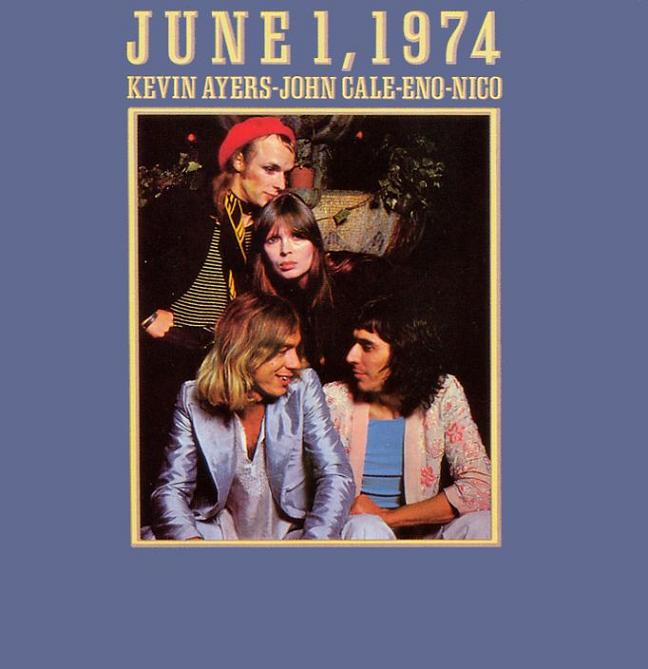
So, I'm indexing this rather thoughtful tome entitled Quenching Hell: The Mystical Theology of William Law. On second read, I am getting an idea of what the book is about, but as with most of the stuff I work on . . . right over my head.
Then comes the first A-level head in the last chapter: "Baby's on Fire." There is no subsequent text in the chapter to justify the use of this header.
Folks, "Baby's on Fire" is one twisted Brian Eno song that appears on the most excellent album pictured here (as well as on Here Come the Warm Jets). If you can't read the type, this is a concert album featuring Kevin Ayers, John Cale, Eno, and Nico. Plenty of good stuff to recommend.
The lyrics appear below. And if anyone can tell me what the connection is, or if the author -- one Alan Gregory -- happens upon this blog and can explain the reference, I would be most appreciative.
Then comes the first A-level head in the last chapter: "Baby's on Fire." There is no subsequent text in the chapter to justify the use of this header.
Folks, "Baby's on Fire" is one twisted Brian Eno song that appears on the most excellent album pictured here (as well as on Here Come the Warm Jets). If you can't read the type, this is a concert album featuring Kevin Ayers, John Cale, Eno, and Nico. Plenty of good stuff to recommend.
The lyrics appear below. And if anyone can tell me what the connection is, or if the author -- one Alan Gregory -- happens upon this blog and can explain the reference, I would be most appreciative.
Baby's on fire
Better throw her in the water
Look at her laughing
Like a heifer to the slaughter
Baby's on fire
And all the laughing boys are bitching
Waiting for photos
Oh the plot is so bewitching
Rescuers row row
Do your best to change the subject
Blow the wind blow blow
Lend some assistance to the object
Photographers snip snap
Take your time she's only burning
This kind of experience
Is necessary for her learning
If you'll be my flotsam
I could be half the man I used to
They said you were hot stuff
And that's what Baby's been reduced to
Juanita and Juan
Very clever with maraccas
Making their fortunes
Selling second-hand tobaccoes
Juan dances at Chico's
And when the clients are evicted
He empties the ashtrays
And pockets all that he's collected
But Baby's on fire!
And all the instruments agree that
Her temperature's rising
But any idiot would know that.
------
Late update: I just wrote to the author. We'll see.
tired of being sick and tired

I'm tired of writing indexes, and I'm tired of writing about indexes. I have four to do or finish up this week (two to go). On three of them, I also copyedited or proofread the books, which helps, but not enough.
I received a query the other day from a university press whose indexer had an emergency medical issue and could not complete the index s/he was working on. The only work thing worse at this point in my life besides another index would be writing half an index and then trying to merge the work of the person who started it and my own. What can I understand from this situation? That the indexer had an emergency medical issue. I can relate. Maybe it was a failed suicide attempt.
Clients who might be reading this: send me something to proofread, will ya?
Friday, August 22, 2008
testimonial
From an author for whom I edited a short piece:
It's been a tough week on a number of accounts. The health report, following up on the last post, is not ultimately a bad one -- a case of diverticulitis brought on by a bacterial infection, for which I'm now on a pair of antibiotics -- but the good prognosis doesn't mean I've felt wonderful, although I'm getting better. And a few other ongoing matters, none of which I'm going to discuss here. But messages like the one above make things a whole lot better.
So, actually, thanks are in order to the author, and those are not words that often come from me.
Bob,
I'm thrilled. This is exactly what I want. . . .
Thanks so very much. You're an answer to prayer. I'm elated.
I'm thrilled. This is exactly what I want. . . .
Thanks so very much. You're an answer to prayer. I'm elated.
It's been a tough week on a number of accounts. The health report, following up on the last post, is not ultimately a bad one -- a case of diverticulitis brought on by a bacterial infection, for which I'm now on a pair of antibiotics -- but the good prognosis doesn't mean I've felt wonderful, although I'm getting better. And a few other ongoing matters, none of which I'm going to discuss here. But messages like the one above make things a whole lot better.
So, actually, thanks are in order to the author, and those are not words that often come from me.
Monday, August 18, 2008
been a while
Sorry for you regular reader(s) out there. I have not been so diligent about posting. More work to do than thoughts about it these days.
The indexing onslaught continues. Did come across this in a book about the downslide in Protestant seminaries in the U.S.:
Some kinds of activities cannot be made more efficient. It probably takes about as much preparation and effort to produce Hamlet or perform a Beethoven symphony in the 21st century as it did centuries ago. Activities that have at their core human effort, training, practice, attention and presence cannot be made much more efficient. No technological invention or social innovation makes it possible to reduce the level of input into such activities and still get the same level of output, so enterprises organized around such activities cannot be made more efficient without a reduction in quality.
Nicely put.
Received a book today from one of my clients that is trying to position itself to produce all the books in this one publisher's new series. Because they want to do a particularly good job on the book, the production manager said to me, "This was sent to our best proofreader." That felt nice. I've often said, although perhaps not here, that proofreading is the one what brung me, and unless I'm really tearing into something good, my proofreading skills rank above my other tasks, although judging from business these days, no one is finding much fault with copyediting or indexing either.
Well . . . perhaps not so fast. In the interest of full disclosure, I did have a publisher recently bounce an index back to the authors (not me) for additional work on the subentries because mine perhaps were too detailed and did not point readers in the correct overall direction. I take this as constructive and not totally unwelcome criticism, but I place part of the blame on two issues: (1) the use of run-in entries, and (2) the slavish adherence on the part of this publisher to have all entries and subentries begin with nouns.
I won't address the latter as much as the former here. To me, run-in entries are absolute hell to read and reduce the value of an index. Very difficult to pick out topics in a run-in index, as opposed to an index with tabbed entries. Sure, they save space, but at what cost? Hell, set the dedication on the copyright page, shorten the acknowledgments, and let the book dictate the index and its quality.
I have a 178-page book coming up where the publisher says, "No more than a four-page index." I can see this sometimes where a publisher wants not to convey the idea that a book is particularly dense, but when you actually have a dense book, detail is what the nonnovice reader will want.
Medical note: I've been semi-sidelined lately with odd gastrointestinal distress. Went to the doctor today, and will be having a CAT-scan tomorrow to check for diverticulitis or colitis. I am hoping it's neither, of course, but the doctor seemed to be somewhat concerned after pressing on my belly and also doing the one-finger wave Down There. First time I've had that, not counting the non-chemically-aided flexible sigmoidoscopy back in '96. Yow.
Actually working on an interesting book now about a private industrialist in Franco's Spain. Knowing nothing about Franco before picking up this book, I'm learning a lot, which of course I will forget in a day or two. Maybe the tiredness I feel these days is the effect of a constant spiking of my IQ while I'm reading/working and then the rebound effect back to the addled, slackjawed slug I am at rest. My lovely wife back in our early years used to not believe me when she'd ask me, "What are you thinking about?" and I'd say, "Nothing." Now I think she understands.
The indexing onslaught continues. Did come across this in a book about the downslide in Protestant seminaries in the U.S.:
Some kinds of activities cannot be made more efficient. It probably takes about as much preparation and effort to produce Hamlet or perform a Beethoven symphony in the 21st century as it did centuries ago. Activities that have at their core human effort, training, practice, attention and presence cannot be made much more efficient. No technological invention or social innovation makes it possible to reduce the level of input into such activities and still get the same level of output, so enterprises organized around such activities cannot be made more efficient without a reduction in quality.
Nicely put.
Received a book today from one of my clients that is trying to position itself to produce all the books in this one publisher's new series. Because they want to do a particularly good job on the book, the production manager said to me, "This was sent to our best proofreader." That felt nice. I've often said, although perhaps not here, that proofreading is the one what brung me, and unless I'm really tearing into something good, my proofreading skills rank above my other tasks, although judging from business these days, no one is finding much fault with copyediting or indexing either.
Well . . . perhaps not so fast. In the interest of full disclosure, I did have a publisher recently bounce an index back to the authors (not me) for additional work on the subentries because mine perhaps were too detailed and did not point readers in the correct overall direction. I take this as constructive and not totally unwelcome criticism, but I place part of the blame on two issues: (1) the use of run-in entries, and (2) the slavish adherence on the part of this publisher to have all entries and subentries begin with nouns.
I won't address the latter as much as the former here. To me, run-in entries are absolute hell to read and reduce the value of an index. Very difficult to pick out topics in a run-in index, as opposed to an index with tabbed entries. Sure, they save space, but at what cost? Hell, set the dedication on the copyright page, shorten the acknowledgments, and let the book dictate the index and its quality.
I have a 178-page book coming up where the publisher says, "No more than a four-page index." I can see this sometimes where a publisher wants not to convey the idea that a book is particularly dense, but when you actually have a dense book, detail is what the nonnovice reader will want.
Medical note: I've been semi-sidelined lately with odd gastrointestinal distress. Went to the doctor today, and will be having a CAT-scan tomorrow to check for diverticulitis or colitis. I am hoping it's neither, of course, but the doctor seemed to be somewhat concerned after pressing on my belly and also doing the one-finger wave Down There. First time I've had that, not counting the non-chemically-aided flexible sigmoidoscopy back in '96. Yow.
Actually working on an interesting book now about a private industrialist in Franco's Spain. Knowing nothing about Franco before picking up this book, I'm learning a lot, which of course I will forget in a day or two. Maybe the tiredness I feel these days is the effect of a constant spiking of my IQ while I'm reading/working and then the rebound effect back to the addled, slackjawed slug I am at rest. My lovely wife back in our early years used to not believe me when she'd ask me, "What are you thinking about?" and I'd say, "Nothing." Now I think she understands.
Saturday, August 2, 2008
to be paid for nonproduction
I'm not sure I can tell this story quickly, but I'll try. Bear with me, because there's some type of moral here.
I received a job for copyediting from one of my regular clients. Typically very easy to work with and the books are usually interesting -- a nice combination. What's different about them is that they pay me on a project basis. I don't take the pages they send me, multiply it by a piece rate, and send them a bill. They tell me up front what the fee will be. I think it's based on some page rate on their end, perhaps on a word count basis or something, but they usually do some of their own formatting and coding first, so it rarely comes to me with the same page count they mention.
So the most recent project comes in, and to me the rate seems too high for what they are asking me to do -- like by a difference of about 100 pages, in my favor. Because I am generally an honest guy who doesn't want to take advantage of regular clients, and what might be a mistake on their part, I ask the managing editor if the project fee is correct, and did he send me the correct files? In order to show him what he sent me, I email him back the files I received, with the comment, "attached are the files I received."
So I get an email from the client yesterday asking where the invoice is. I say I've not yet completed the job. The client writes today, a little indignantly, saying that he wishes I had made it clearer in my original email asking about the rate that the files attached weren't the edited files, because he's just spent most of the day cleaning up the files I returned to him for the author to review.
I wrote him, "Sorry about that. I thought 'attached are the files I received' would have taken care of it. I also always return the files with a different file name, such as adding 'edited' or 'bl' to the end of the document name. But I apologize for the inconvenience and the time wasted on your part."
And the apology was sincere. I do feel bad that he wasted his time.
But here's my question: don't you think he would have noticed that there were no editorial changes in the book -- that I didn't change a single character? But even as I'm writing this, I see another side. This client is unique in that they ask for an electronic edit, but without the changes being tracked. I always presumed that they ran a "compare documents" when they received the files back from me to see what I've done, but I guess not.
Which leads me to a number of possible conclusions: (1) they really trust their editors; (2) they really leave the ultimate responsibility to the authors, or some combination of the two.
Well, whatever. I didn't end up making the point I expected to make.
Going to Atlanta tomorrow/later today to see Return to Forever, one of my favorites of all time, whom I last saw 32 years ago. At that time I was 16 years old, and if you had told me at that time that the next time I saw them as a group (I've since seen three of the four individually) I would be in the company of my wife, college-bound son, and 15-year-old son, I would have looked at you like you had two heads. The last thing I could have imagined myself at age 16 was married with children. Things do change.
I received a job for copyediting from one of my regular clients. Typically very easy to work with and the books are usually interesting -- a nice combination. What's different about them is that they pay me on a project basis. I don't take the pages they send me, multiply it by a piece rate, and send them a bill. They tell me up front what the fee will be. I think it's based on some page rate on their end, perhaps on a word count basis or something, but they usually do some of their own formatting and coding first, so it rarely comes to me with the same page count they mention.
So the most recent project comes in, and to me the rate seems too high for what they are asking me to do -- like by a difference of about 100 pages, in my favor. Because I am generally an honest guy who doesn't want to take advantage of regular clients, and what might be a mistake on their part, I ask the managing editor if the project fee is correct, and did he send me the correct files? In order to show him what he sent me, I email him back the files I received, with the comment, "attached are the files I received."
So I get an email from the client yesterday asking where the invoice is. I say I've not yet completed the job. The client writes today, a little indignantly, saying that he wishes I had made it clearer in my original email asking about the rate that the files attached weren't the edited files, because he's just spent most of the day cleaning up the files I returned to him for the author to review.
I wrote him, "Sorry about that. I thought 'attached are the files I received' would have taken care of it. I also always return the files with a different file name, such as adding 'edited' or 'bl' to the end of the document name. But I apologize for the inconvenience and the time wasted on your part."
And the apology was sincere. I do feel bad that he wasted his time.
But here's my question: don't you think he would have noticed that there were no editorial changes in the book -- that I didn't change a single character? But even as I'm writing this, I see another side. This client is unique in that they ask for an electronic edit, but without the changes being tracked. I always presumed that they ran a "compare documents" when they received the files back from me to see what I've done, but I guess not.
Which leads me to a number of possible conclusions: (1) they really trust their editors; (2) they really leave the ultimate responsibility to the authors, or some combination of the two.
Well, whatever. I didn't end up making the point I expected to make.
Going to Atlanta tomorrow/later today to see Return to Forever, one of my favorites of all time, whom I last saw 32 years ago. At that time I was 16 years old, and if you had told me at that time that the next time I saw them as a group (I've since seen three of the four individually) I would be in the company of my wife, college-bound son, and 15-year-old son, I would have looked at you like you had two heads. The last thing I could have imagined myself at age 16 was married with children. Things do change.
Wednesday, July 30, 2008
acronyms: WTF?


Quote from a present project:
"Again, it is the GPC as used in the BWC and in the CWC that is the safeguard provided by the CBW governance regime against such challenges."
Class, two questions:
1. Can you imagine 338 pages of this?
2. If you know what's going on here, don't you think that the information in the book is probably not going to be news to you?
Personally, I can't keep it straight. At this point, I am no longer trying.
Tuesday, July 29, 2008
South America: Where Are You?
A quick look at the map to the right shows that among the habitable continents, South America is the only one to date where I've not had someone blip in. Then again, whether or not North America is habitable these days, at least the biggest chunk of it, is in question. I was doing some work a few weeks back for a professor from the U. of Alberta, and I intimated that a move north of the border could be a positive step. He agreed, but said that perhaps I hadn't figured in January and February. Point well taken.
Since most of my clients -- the scholarly and university ones anyway -- would probably be considered left of center, I'm probably not going to lose any business with the following little anecdote: we have some Obama signs in our yard, one of which I noticed was bent over and sliced through today. Perhaps it's a result of a sudden storm we had here yesterday with high winds, but given that in the last few years we've had a Hanukkah flag burned in our yard and a burning flare left on top of one of our cars, I think that the destruction was likely intentional. Dare I think what would actually happen here if I ever ventured out of the house? As a friend once said, "It is a wise man who every day learns something new to fear." Uh-huh. Since I've been pictured twice on the front page of the local paper in my eight years in Bristol, maybe I'm a public figure after all. Maybe it's just bad luck.
Nothing really much of interest on the work front to report. Reading a book about translating Christianity into the world's languages, working on an index about weapons of mass destruction, and then next up is memoirs from a New Left pioneer of the early 1960s. Speaking of the New Left (or the Old Left) reminds me of one of my favorite quotes, from Saul Alinsky, a Chicago organizer in whose wake Obama follows: "Don't worry, boys. We'll weather this storm of approval and come out as hated as ever."
Since most of my clients -- the scholarly and university ones anyway -- would probably be considered left of center, I'm probably not going to lose any business with the following little anecdote: we have some Obama signs in our yard, one of which I noticed was bent over and sliced through today. Perhaps it's a result of a sudden storm we had here yesterday with high winds, but given that in the last few years we've had a Hanukkah flag burned in our yard and a burning flare left on top of one of our cars, I think that the destruction was likely intentional. Dare I think what would actually happen here if I ever ventured out of the house? As a friend once said, "It is a wise man who every day learns something new to fear." Uh-huh. Since I've been pictured twice on the front page of the local paper in my eight years in Bristol, maybe I'm a public figure after all. Maybe it's just bad luck.

Nothing really much of interest on the work front to report. Reading a book about translating Christianity into the world's languages, working on an index about weapons of mass destruction, and then next up is memoirs from a New Left pioneer of the early 1960s. Speaking of the New Left (or the Old Left) reminds me of one of my favorite quotes, from Saul Alinsky, a Chicago organizer in whose wake Obama follows: "Don't worry, boys. We'll weather this storm of approval and come out as hated as ever."
Monday, July 28, 2008
the last word (for now) on indexing
The following paragraph comes from indexing guidelines sent out by one of the university presses that hires me:
"A note about software: The automated indexing feature that your word processor might contain will not create an index; it will create a concordance—a word list with page numbers that will not match the book’s pagination without extra work on your part. Indexing software, designed for professional indexers, costs several hundred dollars and takes a long time to learn. Professional indexers use such software to improve consistency and to automate routine tasks, but the actual content of the index still requires the indexer’s attention, analysis, and choices. In other words, even professional indexing software won’t do much of the work of creating an index."
So there.
"A note about software: The automated indexing feature that your word processor might contain will not create an index; it will create a concordance—a word list with page numbers that will not match the book’s pagination without extra work on your part. Indexing software, designed for professional indexers, costs several hundred dollars and takes a long time to learn. Professional indexers use such software to improve consistency and to automate routine tasks, but the actual content of the index still requires the indexer’s attention, analysis, and choices. In other words, even professional indexing software won’t do much of the work of creating an index."
So there.

Subscribe to:
Posts (Atom)