Thursday, March 19, 2009
Author testimonial
"I am doing the final editing that Bob sent me today and I think he is just super in the way he treats my work." --from a romance novelist publishing her twelfth book, reporting to the designer/project manager


Monday, March 9, 2009
I'm baaaack, and the case of the Flying Negroes
Thanks to my five or four regular readers for allowing me this little hiatus, and for occasionally checking in to see if the test pattern was still up. I can't say that it won't go up again soon, but there's been a little activity that calls for an update.
Big question among freelancers is "How's business?" One of my fellow freelancers, a book designer and typesetter, is staying busy because he has learned how to lay out books for Kindle and such. Smart guy.
Another one who mines similar fields as I do, I've not gotten a real good feel for how things are for him. His client list is by design a little smaller than mine, but it used to be that a lot of my work came from him, and if his clients are sending him work and he has time or the need to do it, he might very well be busy, and it keeps work from coming to me. No hard feelings there. I would do the same thing.
I wrote to a few of my publishers last week. One, which has a printshop in the basement (a big one), just laid off 35 people on the pressroom floor and in the art department. Not a good thing.
Another one, a production company that kept me very busy over the last year and a half, says that business has slowed tremendously, and if it keeps up, they don't know what they are going to do. I think much of their work revolved around the textbook market, and it might be that the publisher who was their main client has decided that new editions every two years are not necessary. As the parent of a college student, I can't say this hurts my feelings that much.
So I've been beating the bushes a little the last couple of days. One or two things might turn out. Maybe. I'm going to go along as if nothing will happen, because that's often when something does. But a cratering economy causes people to put on their thinking caps, and that's what I did. We'll see.
So, what's with the Flying Negroes? Probably one of my earliest posts dealt with the phenomenon that I'll go my entire life without hearing of a concept, and then I'll read about it in consecutive unrelated books. This last weekend I was working on a book of essays about Phillis Wheatley, the first African American woman to be published in the United States (late 1700s, from New England). The book mentioned the Flying Negroes, a myth from that time about slaves in America who sprouted wings and flew back to Africa. Interesting stuff. The book went back to the publisher Sunday night.
Today I'm reading a book of essays about the Gullah-Geechee culture in the barrier islands of Georgia. And here again come the Flying Negroes. This time there was a little hint of the whirling dervish thrown into the mix.
Anyway, the test pattern is gone for now. If you're reading this, I'm glad you're here. And I hope the feeling is mutual. Let me know what's been going on in your world since I've been gone.

Big question among freelancers is "How's business?" One of my fellow freelancers, a book designer and typesetter, is staying busy because he has learned how to lay out books for Kindle and such. Smart guy.
Another one who mines similar fields as I do, I've not gotten a real good feel for how things are for him. His client list is by design a little smaller than mine, but it used to be that a lot of my work came from him, and if his clients are sending him work and he has time or the need to do it, he might very well be busy, and it keeps work from coming to me. No hard feelings there. I would do the same thing.
I wrote to a few of my publishers last week. One, which has a printshop in the basement (a big one), just laid off 35 people on the pressroom floor and in the art department. Not a good thing.
Another one, a production company that kept me very busy over the last year and a half, says that business has slowed tremendously, and if it keeps up, they don't know what they are going to do. I think much of their work revolved around the textbook market, and it might be that the publisher who was their main client has decided that new editions every two years are not necessary. As the parent of a college student, I can't say this hurts my feelings that much.
So I've been beating the bushes a little the last couple of days. One or two things might turn out. Maybe. I'm going to go along as if nothing will happen, because that's often when something does. But a cratering economy causes people to put on their thinking caps, and that's what I did. We'll see.
So, what's with the Flying Negroes? Probably one of my earliest posts dealt with the phenomenon that I'll go my entire life without hearing of a concept, and then I'll read about it in consecutive unrelated books. This last weekend I was working on a book of essays about Phillis Wheatley, the first African American woman to be published in the United States (late 1700s, from New England). The book mentioned the Flying Negroes, a myth from that time about slaves in America who sprouted wings and flew back to Africa. Interesting stuff. The book went back to the publisher Sunday night.
Today I'm reading a book of essays about the Gullah-Geechee culture in the barrier islands of Georgia. And here again come the Flying Negroes. This time there was a little hint of the whirling dervish thrown into the mix.
Anyway, the test pattern is gone for now. If you're reading this, I'm glad you're here. And I hope the feeling is mutual. Let me know what's been going on in your world since I've been gone.

Saturday, February 14, 2009

Sunday, February 8, 2009
Land in Demand Studios

Well, the wheels are turning. I won't say yet I'm doing a complete 180 on earlier posts, but I'm getting there. Just in the interest of fairness and full disclosure.
I guess I can look at it this way as well: Imagine yourself as an Internet company in an age when everyone has a keyboard and a way to send in an application, when the company is offering work, when the economy is imploding, and when far more people who are qualified to do so think of themselves as being writers or able to do editing and proofreading work.
I've had a most pleasant ongoing exchange with one of the company's employees to this point, and have done some work that is awaiting internal review. They appear to have an interesting business model and, if nothing else, do seem to be hiring writers and editors . . . which is more than one can say for publishing companies and newspapers these days.
I will report further . . . to a degree. Then I will put the company behind the same veil of anonymity that covers the rest of the Land on Demand stable.
Wednesday, February 4, 2009
testimonial
From the managing editor to the author:
The indexer has completed his work. I have attached the indexes for your review. Up to now, the index of subjects is clearly the best index in any [book of this series].
From the author to the managing editor:
This looks very good after a first quick scan. I agree with the indexer’s strategy, so am fine with that. I’ll look through this tonight and send a word along to you. I can’t imagine, though, that I will have any issue with this. I am very impressed with it. One of my tests was to look for [a particular, and particularly obscure, technical term] to see if that was indexed, and it was. I think the indexer understands the book!
(Insert nervous cough from indexer here.)
The indexer has completed his work. I have attached the indexes for your review. Up to now, the index of subjects is clearly the best index in any [book of this series].
From the author to the managing editor:
This looks very good after a first quick scan. I agree with the indexer’s strategy, so am fine with that. I’ll look through this tonight and send a word along to you. I can’t imagine, though, that I will have any issue with this. I am very impressed with it. One of my tests was to look for [a particular, and particularly obscure, technical term] to see if that was indexed, and it was. I think the indexer understands the book!
(Insert nervous cough from indexer here.)
Becoming a freelance editor; becoming a freelance proofreader; becoming a freelance indexer, Parts 3a and 4: Cold calling follow-up; client relations
One last matter on the cold-calling thing. The first client, one of my faves and responsible for steady work going on 10-11 years, has resulted in zero referrals over that time. The second client -- the vanity publisher -- has, through referrals by its two book designers, been responsible for a variety of work that now accounts for about 10 percent of my annual income, even though the client itself is in a dormant phase. There's no real point to that statement, except that you can never really tell where a nice chunk of work is going to come from. Big client (one that actually publishes books you've heard of), no referrals. Little client, great referrals. I'll take 'em both. Like I said about potential pornography clients (no, I don't have any . . . yet), their money spends the same as everyone else's.
OK. So you've got a client or two or twenty. You're meeting deadlines, you're getting steady work. Scenario: all of a sudden, from a good client: bupkus. (Look it up if you need to.) What happened, and what do you do?
This actually did happen with the first client above last year. I think I got three or four books from them all year until about November. I'd been steady with other work, so didn't think much of it. Then the economy started cratering and I'm thinking it's time to shore up the good folks. So I wrote the managing editor and asked what's up? How come so few jobs this year? The answer I received was instructive, if not entirely logical. "We've been sending work to those people who have let us know they are available." Well, damn. Never occurred to me that I needed to do that.
For many of my clients, I pretty much have a standing arrangement, even though most usually do the courteous (but unnecessary) thing and check with me first. I say, Go ahead and send me the work. Presume I will take it and meet your deadline. Presume I am always available to do your work.
I really think that some of my clients believe (or believed) that I work only for them . . . although how they figure that I am supporting four people, two school payments, a mortgage, a ton of medical bills, and debt out the yin-yang on the basis of a couple of proofreading or indexing jobs each month, I'm not exactly sure. But that is exactly what I want my clients to believe: that I live to work just for them. It's called customer service. I've told my publishers, some in a rather direct manner and any number of times, that my workload is absolutely none of their concern until I start missing deadlines. As long as we have agreed-upon dates and rates, then what other work I have to do is none of their business. And, quite frankly, if I'm working on a page-rate basis, how long it takes me to do a job is not really a concern of theirs either, as long as the quality of my work is such that they have an incentive to send me more work in the future.
This approach sometimes puts me in a bind (I might be giving away some Land on Demand secrets here), because a client will send me a job with a three-week turnaround and five days later ask me how it's going or if I have any questions, or can I send them what I've done so far so they can begin futzing with the design. Ummm, when is my deadline again? Have I missed something?
My fear, with one of my clients in particular, is that per is going to drop a stickinote in the middle of some project that says, "No matter when you are reading this, call me and leave me a message," knowing that it's some huge project, and I'm reading it at three in the morning about five days before it's due, and it's been sitting on my desk for three weeks.
Questions, or the Freelance Performance Appraisal:
Am I getting the work done?
Is it being done for the agreed-upon rate?
Is the quality what you expect from me?
Are you getting it back on time?
If the answer is yes to all those questions, I expect the client to remain a good one. Please don't make me ask the following question:
It's been 30 days. Where's my money?
I hate to be so mercenary about it, but if it weren't for my little slice of the world, I'd have no slice at all. It's called being "without other employable traits."
OK. So you've got a client or two or twenty. You're meeting deadlines, you're getting steady work. Scenario: all of a sudden, from a good client: bupkus. (Look it up if you need to.) What happened, and what do you do?
This actually did happen with the first client above last year. I think I got three or four books from them all year until about November. I'd been steady with other work, so didn't think much of it. Then the economy started cratering and I'm thinking it's time to shore up the good folks. So I wrote the managing editor and asked what's up? How come so few jobs this year? The answer I received was instructive, if not entirely logical. "We've been sending work to those people who have let us know they are available." Well, damn. Never occurred to me that I needed to do that.
For many of my clients, I pretty much have a standing arrangement, even though most usually do the courteous (but unnecessary) thing and check with me first. I say, Go ahead and send me the work. Presume I will take it and meet your deadline. Presume I am always available to do your work.
I really think that some of my clients believe (or believed) that I work only for them . . . although how they figure that I am supporting four people, two school payments, a mortgage, a ton of medical bills, and debt out the yin-yang on the basis of a couple of proofreading or indexing jobs each month, I'm not exactly sure. But that is exactly what I want my clients to believe: that I live to work just for them. It's called customer service. I've told my publishers, some in a rather direct manner and any number of times, that my workload is absolutely none of their concern until I start missing deadlines. As long as we have agreed-upon dates and rates, then what other work I have to do is none of their business. And, quite frankly, if I'm working on a page-rate basis, how long it takes me to do a job is not really a concern of theirs either, as long as the quality of my work is such that they have an incentive to send me more work in the future.
This approach sometimes puts me in a bind (I might be giving away some Land on Demand secrets here), because a client will send me a job with a three-week turnaround and five days later ask me how it's going or if I have any questions, or can I send them what I've done so far so they can begin futzing with the design. Ummm, when is my deadline again? Have I missed something?
My fear, with one of my clients in particular, is that per is going to drop a stickinote in the middle of some project that says, "No matter when you are reading this, call me and leave me a message," knowing that it's some huge project, and I'm reading it at three in the morning about five days before it's due, and it's been sitting on my desk for three weeks.
Questions, or the Freelance Performance Appraisal:
Am I getting the work done?
Is it being done for the agreed-upon rate?
Is the quality what you expect from me?
Are you getting it back on time?
If the answer is yes to all those questions, I expect the client to remain a good one. Please don't make me ask the following question:
It's been 30 days. Where's my money?
I hate to be so mercenary about it, but if it weren't for my little slice of the world, I'd have no slice at all. It's called being "without other employable traits."
Tuesday, February 3, 2009
news alert: Demand Studios
Talk about a company that doesn't harbor ill feelings. Demand Studios sent me an editing test, which I passed (whew), and they are looking to train some editors to work about 20 hours per week steady through the year. We will see where this leads. In these days, even if the pay is a little less than I might be willing to accept from my regular clients, some of my regular clients have become a little lackadaisical about prompt payment. The idea of someone dropping some money in my account every Friday sounds pretty good right about now.
Funny thing: The woman who sent me the test and let me know that I'd passed it quoted a word or two from my blog back to me. I'll award bonus points for that. I'm not sure I'd have been so magnanimous.
Funny thing: The woman who sent me the test and let me know that I'd passed it quoted a word or two from my blog back to me. I'll award bonus points for that. I'm not sure I'd have been so magnanimous.
Sunday, February 1, 2009
Becoming a freelance editor; becoming a freelance proofreader; becoming a freelance indexer, Part 3 -- Cold calling
I might have to retitle this string of posts, "How to Avoid Working and Not Be Paid." We'll file it under community service.
OK. So the two cold calls that resulted in work: I won't give away the names of the publishers in the list to the right, but if you wanted to do the research, you could figure it out -- or narrow it down to three or four anyway. One is a trade publisher, one is pretty much of a subsidy publisher.
Both of these clients go back to the late 1990s, because I remember that I was living in Florida when I started working for both of them. Here was my underlying strategy and thinking.
I'm in the Southeast, which is also where my college degree is from and where my entire work career has taken place. The northernmost point on my resume is Atlanta. I figure that for no logical reason (except maybe saving a few dollars on FedEx), a southeastern publisher might like working with someone in the same region rather than a publishing mecca like NYC. I imagine that most of the big-name publishing houses probably have deep lists of freelancers or get so many requests from freelancers that my chances of breaking in to one of them is slim. I also figure that I should concentrate on publishers that are relatively newly formed (within the previous 15-20 years), ones that don't put out a huge number of books per year (maybe 40-75), and ones that publish books I'd like to read.

Armed with those parameters, I buy a copy of Writer's Market, a 1000-page paperback that comes out every year, listing most of the book publishers in the United States and Canada. I begin looking for publishers that meet the above standards. Nailing it down, I send out maybe 20 letters, figuring that for the cost of 6 or 8 bucks in postage and a morning of writing and printing letter and envelopes, it takes only one job to pay back that time and expense. The only time I ever consider a no a "No" is when I actually receive a letter back saying, "Thanks for trying, but we ain't hiring, and we ain't hiring you." That rarely happens. I imagine that my unanswered letters are waiting in a file cabinet somewhere for the proper moment. And yes, that line of thought has paid off more than once.
One of the companies calls me. They send me a proofreading test and a copyediting test. I pass them both. In the first month I worked for them about 10 or 11 years ago, they sent me a book a week for a month. Not a bad return on my time investment. And the company is still a good client. I just finished a copyediting job for them and now have a proofing job on my desk from them. Except for one of their editors, I have been associated with the company for longer than any of the present editorial staff. Even better, their jobs are nonscholarly, so they provide a nice break from the usual tedium.
Case number two. It's nighttime sometime in 1999, and I begin searching the Internet for vanity presses, emailing the publishers and wanting to know if they need any proofreading/copyediting/indexing help. I hear back from one of them within about an hour, saying, "Sure. Can I send you a job in a few weeks?"
For these two success stories in cold-calling book publishers, I've written probably 100 letters and emails over the years that didn't pan out. Yet every once in a while I'll get bored and still send some emails to publishers or potential authors (ABDs, for example [all but dissertation]) letting them know I'm out here, but I'll be pretty direct about whom I send such letters to. Mostly these days, I would not be looking for more scholarly work. I've written to a number of publishers in the fields of erotica and, well, porn, for example. You know what? I need a break from indexing things like the latest exposition on the book of Revelation or copyediting 1500 pages of theological anthropology, and if some publisher wants to pay me to copyedit or proofread the latest trash fiction on gay romps in the British boarding school system, that check'll cash the same as the one from Yale University Press.
Probably more than you needed to know. But I am practical.
OK. So the two cold calls that resulted in work: I won't give away the names of the publishers in the list to the right, but if you wanted to do the research, you could figure it out -- or narrow it down to three or four anyway. One is a trade publisher, one is pretty much of a subsidy publisher.
Both of these clients go back to the late 1990s, because I remember that I was living in Florida when I started working for both of them. Here was my underlying strategy and thinking.
I'm in the Southeast, which is also where my college degree is from and where my entire work career has taken place. The northernmost point on my resume is Atlanta. I figure that for no logical reason (except maybe saving a few dollars on FedEx), a southeastern publisher might like working with someone in the same region rather than a publishing mecca like NYC. I imagine that most of the big-name publishing houses probably have deep lists of freelancers or get so many requests from freelancers that my chances of breaking in to one of them is slim. I also figure that I should concentrate on publishers that are relatively newly formed (within the previous 15-20 years), ones that don't put out a huge number of books per year (maybe 40-75), and ones that publish books I'd like to read.

Armed with those parameters, I buy a copy of Writer's Market, a 1000-page paperback that comes out every year, listing most of the book publishers in the United States and Canada. I begin looking for publishers that meet the above standards. Nailing it down, I send out maybe 20 letters, figuring that for the cost of 6 or 8 bucks in postage and a morning of writing and printing letter and envelopes, it takes only one job to pay back that time and expense. The only time I ever consider a no a "No" is when I actually receive a letter back saying, "Thanks for trying, but we ain't hiring, and we ain't hiring you." That rarely happens. I imagine that my unanswered letters are waiting in a file cabinet somewhere for the proper moment. And yes, that line of thought has paid off more than once.
One of the companies calls me. They send me a proofreading test and a copyediting test. I pass them both. In the first month I worked for them about 10 or 11 years ago, they sent me a book a week for a month. Not a bad return on my time investment. And the company is still a good client. I just finished a copyediting job for them and now have a proofing job on my desk from them. Except for one of their editors, I have been associated with the company for longer than any of the present editorial staff. Even better, their jobs are nonscholarly, so they provide a nice break from the usual tedium.
Case number two. It's nighttime sometime in 1999, and I begin searching the Internet for vanity presses, emailing the publishers and wanting to know if they need any proofreading/copyediting/indexing help. I hear back from one of them within about an hour, saying, "Sure. Can I send you a job in a few weeks?"
For these two success stories in cold-calling book publishers, I've written probably 100 letters and emails over the years that didn't pan out. Yet every once in a while I'll get bored and still send some emails to publishers or potential authors (ABDs, for example [all but dissertation]) letting them know I'm out here, but I'll be pretty direct about whom I send such letters to. Mostly these days, I would not be looking for more scholarly work. I've written to a number of publishers in the fields of erotica and, well, porn, for example. You know what? I need a break from indexing things like the latest exposition on the book of Revelation or copyediting 1500 pages of theological anthropology, and if some publisher wants to pay me to copyedit or proofread the latest trash fiction on gay romps in the British boarding school system, that check'll cash the same as the one from Yale University Press.
Probably more than you needed to know. But I am practical.
Saturday, January 31, 2009
Becoming a freelance editor; becoming a freelance proofreader; becoming a freelance indexer, Part 2 -- Building a clientele
Don't give up the day job. Not for a long time.
Getting starting in freelancing can be hard. Being a full-time productive freelancer -- that is, where you are no longer marketing yourself to new clients -- can take an awfully long time.
When I am speaking to college students about freelancing, I say, "If you want to be a full-time freelance editor/proofreader by the time you are forty, set a goal of having two good clients by the time you are twenty-five." I have no real data on which to base these numbers, but they felt right the first time I said them, and I haven't felt it necessary to change my tune.
Looking at my client list, I can say that exactly two of the companies on that list were developed as a result of cold calling -- where I identified the company, let them know of my services, and they took the bait. The remainder came to me either by referral or word of mouth.
By referral, I am referring mostly to two people.
One lives in Atlanta and does what I do, and I came to know per because the company I worked for while I was writing textbooks would hire per for copyediting. When I wanted to begin freelancing in that area, I let per know. Per -- as far as I know -- does not freelance full-time, which is to say that while per is busy, per doesn't run the kind of operation where per takes on 10 or 12 books a month. But per has a great reputation and a great client list, and whenever per gets a call and doesn't want to take on any more work, per sends them my way. Per began doing so in 1990 or so and continues to do it to this day. Praise A.S. from whom many blessings flow.
The other person is an editor and a typesetter who was editing and translating major works of theology about the time I was getting bar mitzvahed. About 7 or 8 years ago, we worked on different ends of a project. Per liked my work and made me a deal. Per wanted to do more typesetting and get away from editing, so if I could take on a lot of the proofreading, editing, and indexing that was coming per's way, per could package all our services together, present to the company that per'd be a one-stop shop for the production, and concentrate on the typesetting. We don't work together as much as we did a few years ago, but I've been put in front of a lot of companies as a result, and some now come to me independently.
The best thing for a freelancer to do is to stay put, and these days because of email and cellphones (and blogs), that's easier to do. When I say "stay put," I mean keep yourself where someone can find you, even years later. Of course, in the current economy, who knows what's coming down the pike, but in the old days, when people would change jobs, my name might stay with Company A and travel with a mobile managing editor to Company B. Unfortunately that can work the other way, too, where someone new comes into a company where I used to have a good connection, but the new person has per's own list of freelancers, on which I do not appear. There's one company in particular where I fear a particular managing editor ever leaving because of the amount of work per sends my way, and per's next-door neighbor -- the other managing editor -- and I don't get along real well because an email I wrote some years back that was supposed not to be taken seriously was taken way too seriously. End of relationship. It happens. Lesson learned: if you're going to make jokes, maybe it's time to pick up the phone. Per used to send me some work, but sends me zero work now -- except for a pain-in-the-butt index I did last year because the author requested me.
So, get to know a few people, and build on those relationships. Get to know book designers, because they are very good sources of referrals.
And the Land on Demand credos:
Don't ever turn down work and make referrals only for very good reasons, because when you do, you're just opening up the door for your replacement. Having said that, even though A.S. has referred a ton of companies to me, I doubt per's business has suffered. Probably just the opposite. Per's reputation is enhanced because per made a useful referral that worked out well for the publisher. And for the most part, I'll bet we are now just working for some of the same companies. I don't think I've taken any food off per's table. (By the way, among the very good reasons to make referrals are that you would be unable to complete a job in a timely manner, or to help a good, young freelancer get started.)
Meet the deadlines. Always. At least for the first five years with a client. And if you need to miss one after those years, make sure you let them know well in advance and apologize profusely. (Inside information: a lot of times after you return a job to a managing editor, it sits on their desk for a while anyway. They just need to keep production moving and want the job available when it's time to work on it. For the most part, these gigs are not like Japanese Just-in-time production. Missing a deadline often will not put a managing editor in an immediate bind [although if it does, it would most likely be for an index], but the proper thing to do is to keep these folks informed. They are, after all, your source of income.)
Above all, do damn good work. Nothing beats that. I guess I'm doing something OK to have enough repeating clients to stay busy (fingers crossed).

I will work for anybody who does not advocate violence against me or my family directly. I've never really had this challenged, although this one individual who I used to help put out a monthly 8-page publication changed per's tone after some time and would go off on rants on per's website (which per didn't have at the time) about the Jew media. I was no longer working for per at that time, but it's the only situation in which I really would have had to consider continued employment. But for $25 a month, I probably could afford to take a stand. One time, in lieu of cash payment from per, I accepted a T-shirt with a Confederate battle flag on the front and a pointillist drawing of Nathan Bedford Forrest on the back. I don't wear it out of the house too much. Well, actually, never.
Next post: What about those cold calls? How did I identify who I would call, and why did it work?
Getting starting in freelancing can be hard. Being a full-time productive freelancer -- that is, where you are no longer marketing yourself to new clients -- can take an awfully long time.
When I am speaking to college students about freelancing, I say, "If you want to be a full-time freelance editor/proofreader by the time you are forty, set a goal of having two good clients by the time you are twenty-five." I have no real data on which to base these numbers, but they felt right the first time I said them, and I haven't felt it necessary to change my tune.
Looking at my client list, I can say that exactly two of the companies on that list were developed as a result of cold calling -- where I identified the company, let them know of my services, and they took the bait. The remainder came to me either by referral or word of mouth.
By referral, I am referring mostly to two people.
One lives in Atlanta and does what I do, and I came to know per because the company I worked for while I was writing textbooks would hire per for copyediting. When I wanted to begin freelancing in that area, I let per know. Per -- as far as I know -- does not freelance full-time, which is to say that while per is busy, per doesn't run the kind of operation where per takes on 10 or 12 books a month. But per has a great reputation and a great client list, and whenever per gets a call and doesn't want to take on any more work, per sends them my way. Per began doing so in 1990 or so and continues to do it to this day. Praise A.S. from whom many blessings flow.
The other person is an editor and a typesetter who was editing and translating major works of theology about the time I was getting bar mitzvahed. About 7 or 8 years ago, we worked on different ends of a project. Per liked my work and made me a deal. Per wanted to do more typesetting and get away from editing, so if I could take on a lot of the proofreading, editing, and indexing that was coming per's way, per could package all our services together, present to the company that per'd be a one-stop shop for the production, and concentrate on the typesetting. We don't work together as much as we did a few years ago, but I've been put in front of a lot of companies as a result, and some now come to me independently.
The best thing for a freelancer to do is to stay put, and these days because of email and cellphones (and blogs), that's easier to do. When I say "stay put," I mean keep yourself where someone can find you, even years later. Of course, in the current economy, who knows what's coming down the pike, but in the old days, when people would change jobs, my name might stay with Company A and travel with a mobile managing editor to Company B. Unfortunately that can work the other way, too, where someone new comes into a company where I used to have a good connection, but the new person has per's own list of freelancers, on which I do not appear. There's one company in particular where I fear a particular managing editor ever leaving because of the amount of work per sends my way, and per's next-door neighbor -- the other managing editor -- and I don't get along real well because an email I wrote some years back that was supposed not to be taken seriously was taken way too seriously. End of relationship. It happens. Lesson learned: if you're going to make jokes, maybe it's time to pick up the phone. Per used to send me some work, but sends me zero work now -- except for a pain-in-the-butt index I did last year because the author requested me.
So, get to know a few people, and build on those relationships. Get to know book designers, because they are very good sources of referrals.
And the Land on Demand credos:
Don't ever turn down work and make referrals only for very good reasons, because when you do, you're just opening up the door for your replacement. Having said that, even though A.S. has referred a ton of companies to me, I doubt per's business has suffered. Probably just the opposite. Per's reputation is enhanced because per made a useful referral that worked out well for the publisher. And for the most part, I'll bet we are now just working for some of the same companies. I don't think I've taken any food off per's table. (By the way, among the very good reasons to make referrals are that you would be unable to complete a job in a timely manner, or to help a good, young freelancer get started.)
Meet the deadlines. Always. At least for the first five years with a client. And if you need to miss one after those years, make sure you let them know well in advance and apologize profusely. (Inside information: a lot of times after you return a job to a managing editor, it sits on their desk for a while anyway. They just need to keep production moving and want the job available when it's time to work on it. For the most part, these gigs are not like Japanese Just-in-time production. Missing a deadline often will not put a managing editor in an immediate bind [although if it does, it would most likely be for an index], but the proper thing to do is to keep these folks informed. They are, after all, your source of income.)
Above all, do damn good work. Nothing beats that. I guess I'm doing something OK to have enough repeating clients to stay busy (fingers crossed).
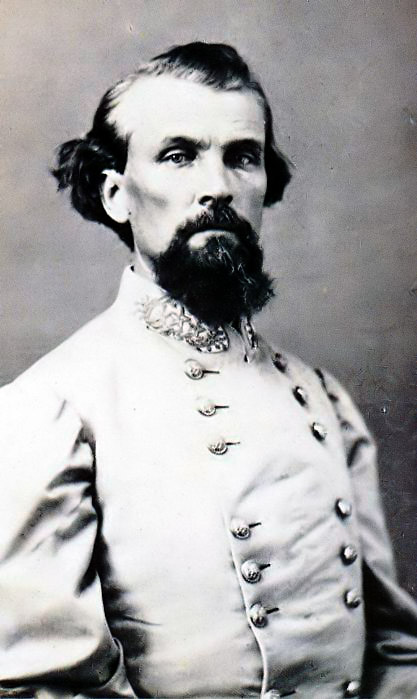
I will work for anybody who does not advocate violence against me or my family directly. I've never really had this challenged, although this one individual who I used to help put out a monthly 8-page publication changed per's tone after some time and would go off on rants on per's website (which per didn't have at the time) about the Jew media. I was no longer working for per at that time, but it's the only situation in which I really would have had to consider continued employment. But for $25 a month, I probably could afford to take a stand. One time, in lieu of cash payment from per, I accepted a T-shirt with a Confederate battle flag on the front and a pointillist drawing of Nathan Bedford Forrest on the back. I don't wear it out of the house too much. Well, actually, never.
Next post: What about those cold calls? How did I identify who I would call, and why did it work?
Friday, January 30, 2009
why i might remain semiemployable through the current difficulties
Give or take a couple of missing Hebrew alephs (in the place of the close parens) and a Greek character or two, and that the letters in brackets below ought to be superscripts, the following makes perfect sense to some people.
"Houtos appears in TR, following )c P 046 and most minuscules; houtoms in ) A C 1006 2344 it[gig, 61] vg sy[ph, h] sa,bo arm eth al."
And trust me, as always, there are better examples. This one just happens to be on the page in front of me.
Which is why my little niche is providing some meager hope of comfort. It's not like I'm working for publishing houses that count on bestsellers. Having said that, believe it or not, the book in which this sentence appears will sell thousands (I'm pretty sure) because of the company that is publishing it, the series it's in, and the topic it covers.
Anyone care to venture a guess what all the above is about? No, it is not alien transmissions or transcriptions of CIA shortwave radio broadcasts.
PS: I know he's had his mind on other things, but do you think the new president has asked to see the Area 51 files yet? Or the soundstage where the moon landing was allegedly filmed?
"Houtos appears in TR, following )c P 046 and most minuscules; houtoms in ) A C 1006 2344 it[gig, 61] vg sy[ph, h] sa,bo arm eth al."
And trust me, as always, there are better examples. This one just happens to be on the page in front of me.
Which is why my little niche is providing some meager hope of comfort. It's not like I'm working for publishing houses that count on bestsellers. Having said that, believe it or not, the book in which this sentence appears will sell thousands (I'm pretty sure) because of the company that is publishing it, the series it's in, and the topic it covers.
Anyone care to venture a guess what all the above is about? No, it is not alien transmissions or transcriptions of CIA shortwave radio broadcasts.
PS: I know he's had his mind on other things, but do you think the new president has asked to see the Area 51 files yet? Or the soundstage where the moon landing was allegedly filmed?
Monday, January 26, 2009
Becoming a freelance editor; becoming a freelance proofreader; becoming a freelance indexer, Part 1 -- getting into freelancing
THE BACKSTORY
I’ve spent almost all of my blogging energy talking about what it’s like to be a freelance editor/proofreader/indexer. Now’s the time to talk about the journey into freelancing. All I can give you is my perspective. I can’t speak for anyone else’s experience.
What’s prompted this first of a number of posts are two emails I’ve received in the last few days:
Hi Bob.
My name is xxx and I am a freelance copyeditor/proofreader.
I am having a very hard time finding employment. I have a Bachelor's degree in education and have worked (freelance) with an educational publishing company for three years. I have also worked with two book publishers for 2 additional years. I have excellent references, a proven work ethic, etc. I have been turned down by Demand Studios and others I seldom get a response from. I have been accepted by many others but rarely receive a project. What's the catch? It seems like I spend a tremendous amount of time searching for jobs but to no avail.
Do you have any suggestions?
Thank you,
xxx
Hello Bob,
First, I would like to thank you for your blog. I stumbled across it while searching for information on Demand Studios and found your comments helpful.
I recently graduated with a B.A. in English and have been working in the “real world” for a little over two years now. In order to get a job in my field, I was forced to move five hours away from my family and fiancé. Now I work as an editor for a PR company, but my goal is to become freelance.
Can you offer me any advice on how to start out as a freelance editor? Am I being naïve to even consider going freelance with so little work experience?
I appreciate your time!
Thank you,
yyyyy
Both of these correspondents possess actual work experience, which is a plus. As I think I mentioned early in my blogging, I finally grew so tired of Tere (my wife) telling me that so-and-so heard about what I do, and they want to get into my line of work. What were their qualifications? Well, they were always catching errors in menus or in church bulletins or in the newspaper, so they figured they’d make good proofreaders.
Any maybe they would. And maybe, to delve into the vernacular, if my aunt had testicles, she’d be my uncle.
Being an armchair editor/proofreader is easy. (As far as I know, there are no armchair indexers. If there are, it’s time to get back on your medication.) Especially these days, when every sap with a keyboard fancies perself as a graphic designer and a typesetter, it’s easy to find mistakes in menus and bulletins and such because you have amateurs setting the copy.
(I’m realizing I'm going to go on like this for hours, but it’s what the times demand. I'll break this up into a number of different posts.)
A very dear friend of mine is an editor and writer who always seemed baffled when I tried to help a newcomer. What amazed him was that the first question out of my mouth wasn’t, “What experience do you have?” My first reaction to the newcomer was always more along the lines of “Go to this book, write this kind of letter, look for these kinds of companies.” But he was absolutely right. I don’t think I’d mind being a long-haul truck driver. At least one thing is keeping me from doing so. I can only drive an automatic transmission car. I have no illusions that a trucking company would have any use for me. I have no experience.
But these two people do have experience -- some, anyway. And that’s a good start. Where to go from there?
Coming up next: what is a realistic expectation for being a full-time freelancer?
I’ve spent almost all of my blogging energy talking about what it’s like to be a freelance editor/proofreader/indexer. Now’s the time to talk about the journey into freelancing. All I can give you is my perspective. I can’t speak for anyone else’s experience.
What’s prompted this first of a number of posts are two emails I’ve received in the last few days:
Hi Bob.
My name is xxx and I am a freelance copyeditor/proofreader.
I am having a very hard time finding employment. I have a Bachelor's degree in education and have worked (freelance) with an educational publishing company for three years. I have also worked with two book publishers for 2 additional years. I have excellent references, a proven work ethic, etc. I have been turned down by Demand Studios and others I seldom get a response from. I have been accepted by many others but rarely receive a project. What's the catch? It seems like I spend a tremendous amount of time searching for jobs but to no avail.
Do you have any suggestions?
Thank you,
xxx
Hello Bob,
First, I would like to thank you for your blog. I stumbled across it while searching for information on Demand Studios and found your comments helpful.
I recently graduated with a B.A. in English and have been working in the “real world” for a little over two years now. In order to get a job in my field, I was forced to move five hours away from my family and fiancé. Now I work as an editor for a PR company, but my goal is to become freelance.
Can you offer me any advice on how to start out as a freelance editor? Am I being naïve to even consider going freelance with so little work experience?
I appreciate your time!
Thank you,
yyyyy
Both of these correspondents possess actual work experience, which is a plus. As I think I mentioned early in my blogging, I finally grew so tired of Tere (my wife) telling me that so-and-so heard about what I do, and they want to get into my line of work. What were their qualifications? Well, they were always catching errors in menus or in church bulletins or in the newspaper, so they figured they’d make good proofreaders.
Any maybe they would. And maybe, to delve into the vernacular, if my aunt had testicles, she’d be my uncle.
Being an armchair editor/proofreader is easy. (As far as I know, there are no armchair indexers. If there are, it’s time to get back on your medication.) Especially these days, when every sap with a keyboard fancies perself as a graphic designer and a typesetter, it’s easy to find mistakes in menus and bulletins and such because you have amateurs setting the copy.
(I’m realizing I'm going to go on like this for hours, but it’s what the times demand. I'll break this up into a number of different posts.)
A very dear friend of mine is an editor and writer who always seemed baffled when I tried to help a newcomer. What amazed him was that the first question out of my mouth wasn’t, “What experience do you have?” My first reaction to the newcomer was always more along the lines of “Go to this book, write this kind of letter, look for these kinds of companies.” But he was absolutely right. I don’t think I’d mind being a long-haul truck driver. At least one thing is keeping me from doing so. I can only drive an automatic transmission car. I have no illusions that a trucking company would have any use for me. I have no experience.
But these two people do have experience -- some, anyway. And that’s a good start. Where to go from there?
Coming up next: what is a realistic expectation for being a full-time freelancer?
Sunday, January 25, 2009
The rules on indexing rates
This is real-time work here. I just seconds ago sent the following email to a new client, and I post it here mostly so I'll have it to refer to in case I need it again. Sometimes newcomers are baffled by indexing rates (particularly why a page that's half-filled with type is billed the same as a page full of type), so if you're new to hiring an indexer, here's a primer.
By the way, the answer to the parenthetical question above is simple: A half-page of type could have five times the number of indexable entries as a full page of type. Indexers would go crazy(ier) if they had to figure out how much substance was on each page and bill accordingly. Hence, the easiest thing to do is as follows:
===================
By the way, the answer to the parenthetical question above is simple: A half-page of type could have five times the number of indexable entries as a full page of type. Indexers would go crazy(ier) if they had to figure out how much substance was on each page and bill accordingly. Hence, the easiest thing to do is as follows:
===================
The reason I ask about page count and trim size is that's the way indexes are billed: indexable pages times rate, and the rate is based on the trim size. As an indexer, I can't really concern myself with the amount of text overall because, as you can imagine, that's purely a design decision about how much text is going to go on a page. Having said that, if the book is set with something like 18-point type on 28-point leading, I'd cut a break on the page rate, obviously. But if the design is more or less within normal looks-like-a-book standards, the rate is what it is, regardless of design decisions that lengthen or tighten the book. With clients who use me regularly, some 6x9 books are set densely and some loosely, but the rate stays the same for a 6x9 book, and the work evens out over time.
For a 7x9 book, the rate is $4.05/indexable page -- which is pretty much everything from the introduction to the end of the running chapters inclusive. Acknowledgments and foreword are not indexed. Preface is indexed if there's indexable information in there. Glossary not indexed. Appendices are generally not indexed (except maybe very generally) because their titles usually appear in a table of contents, which is good enough. A page is a page, regardless of the amount of type on it, which is to say, chapter openers and chapter enders that might have less type on them still count as a page for billing purposes. Endnotes/footnotes are typically indexed for the substantive material that appears in them, but if the author/press does not want them indexed, then I don't index them.
If any of this seems like it's coming out of left field, let me know. But it's pretty much SOP for any full-time, professional indexer. I just want to make full disclosure up front rather than encounter any difficulties at a later stage.
Saturday, January 24, 2009
Two Aryans
A quick story from the Land on Demand annals.
I was working for a typesetting and design firm in Atlanta (name forgotten) along with one of my all-time favorite typesetters, Jerry Ramsey. (Oh, god, once I get off on Jerry Ramsey, this story's not going to be so quick. One sentence into a freaking post, and I'm already off on a tangent.)
Tangent: Way back when, when I was essentially a kid (about 26 years old), I was writing and editing life and health insurance textbooks. One of the reasons I was hired into this company is that, unlike most English majors, I actually had worked in print production for about three years -- at a printing plant and at a typesetting shop. So I thought I knew a little more than my peers about typesetting. Maybe that's true, maybe not, but with the arrogance of youth, I cast about to find my own person to typeset the book that I'd been working on for the last two years.
I don't know how I found him, but into my life comes Jerry Ramsey. Jerry at the time was working for a typesetting firm that Coca-Cola had essentially bought (or rented) and brought in house. This is what Coca-Cola would do in those days: find a design firm, and bring them in to work on Coca-Cola's materials for a year or two, then replace them with someone else.
Jerry was, to put it mildly, a great typesetter, and a true character. He was extremely demanding of himself and of those around him, which meant we drove each other crazy, because I was at my all-time anal proofreading heights (or depths) at that time. At my freelance gigs, I'd point out leading problems that amounted to about 1/128th of an inch and keep sending 'em back to be corrected until they finally got fixed.

So, I hired Jerry to typeset my first professional work as an editor, Accounting in Life and Health Insurance Companies (winner of the 1987 Elizur Wright award for the year's most outstanding contribution to the literature of risk and insurance). Well, as great a typesetter as Jerry was of advertising materials, he was not a typesetter of books. There is a difference. (There are so many potential tangents here; I'm really restraining myself.) So I'm beating my head against the wall trying to make Jerry make this damn thing look like a book, and Jerry's doing all he can to avoid beating the hell out of me, and he could do it if he wanted to.
I was working for a typesetting and design firm in Atlanta (name forgotten) along with one of my all-time favorite typesetters, Jerry Ramsey. (Oh, god, once I get off on Jerry Ramsey, this story's not going to be so quick. One sentence into a freaking post, and I'm already off on a tangent.)
Tangent: Way back when, when I was essentially a kid (about 26 years old), I was writing and editing life and health insurance textbooks. One of the reasons I was hired into this company is that, unlike most English majors, I actually had worked in print production for about three years -- at a printing plant and at a typesetting shop. So I thought I knew a little more than my peers about typesetting. Maybe that's true, maybe not, but with the arrogance of youth, I cast about to find my own person to typeset the book that I'd been working on for the last two years.
I don't know how I found him, but into my life comes Jerry Ramsey. Jerry at the time was working for a typesetting firm that Coca-Cola had essentially bought (or rented) and brought in house. This is what Coca-Cola would do in those days: find a design firm, and bring them in to work on Coca-Cola's materials for a year or two, then replace them with someone else.
Jerry was, to put it mildly, a great typesetter, and a true character. He was extremely demanding of himself and of those around him, which meant we drove each other crazy, because I was at my all-time anal proofreading heights (or depths) at that time. At my freelance gigs, I'd point out leading problems that amounted to about 1/128th of an inch and keep sending 'em back to be corrected until they finally got fixed.

So, I hired Jerry to typeset my first professional work as an editor, Accounting in Life and Health Insurance Companies (winner of the 1987 Elizur Wright award for the year's most outstanding contribution to the literature of risk and insurance). Well, as great a typesetter as Jerry was of advertising materials, he was not a typesetter of books. There is a difference. (There are so many potential tangents here; I'm really restraining myself.) So I'm beating my head against the wall trying to make Jerry make this damn thing look like a book, and Jerry's doing all he can to avoid beating the hell out of me, and he could do it if he wanted to.
Jerry was not a small man, but he had these stubby little fingers. I later came to find out that he was a very good jazz pianist, and some years later I was watching him work in utter amazement. These fat little sausages would hover above the keyboard -- you could hardly detect any motion at all -- and the freaking screen would just fill up with words, about as fast as you could read them. "Jerry, how fast do you type?" "Oh, about 120 words a minute."
Like my pal Tim Bentley, Jerry was an inveterate freelancer and wanderer, and we loved working together, because we both were perfectionists. Whenever Jerry would move from place to place, if he needed a proofreader, he'd call me.
Back to the story. Jerry was working for this company that had landed the contract to produce two Scholastic textbooks. I believe one was a 4th-grade English text and the other was a 7th-grade science book. No matter, really. But coming out of 10 or so years of developing curriculum, I thought this stuff was pretty groovy. Beautiful four-color work, multidisciplinary -- really state-of-the-art textbooks and curriculum. Very ambitious. I remember the English text getting into Walt Whitman -- for 4th-graders. The typesetting files were incredibly complex: links and layers and all kinds of stuff going on that I couldn't comprehend, but it took a master like Jerry to pull it off.
The other thing about these Scholastic books is that they were politically correct to the extreme. You could tell that the designers were working off a checklist: "OK, we've got a black girl, now we need the Asian in the wheelchair, and the Native with the eyeglasses, and the white boy looking confused." Typically I don't get too riled up about this stuff, but these texts were so consciously trying to be everything to everybody that it was just distracting.
One night (always at night with Jerry; I'm not sure, except for that first textbook, we ever saw each other when it wasn't about midnight, or later) I'm proofreading the pages against Scholastic's manuscript files, which were immense. It really took all your concentration just to get through a page. And lo and behold, there's a picture of a white boy and a white girl. And a stickinote attached to the file by one of Scholastic's editors that I will never, ever, ever forget:
"Why do we have two Aryans here?"
Now let me say that these two kids were hardly embodiments of Hitler Youth. They could have been two Jewish kids for all I know. And people who've read my blog or certainly seen my comments on, for example, Moi's blog know where I am, or can be, politically and socially. "Why do we have two Aryans here?" Just think about that.
My Final Demand Studios Comment
Anonymous commented on my blog on 1/3/2009:
If you want to proof titles, send an e-mail with your resume to: TitlingTeam@demandstudios.com
They will send you a link to take a test. If you pass the test, and are immediately hired. They pay .08 per title. You proof 20 titles per page, and some proofers can edit the titles in 5 minutes. So, you can make up to $20 per hour doing. Not bad for flexible online work. They have hired many title proofers that don't have near your experience. If you pass the test, you are hired. Simple as that.
=================
"Simple as that." Except when you don't hear from them. Ever. Gee, it couldn't be that they don't want to hire someone whose blog posts trashing them show up when others are doing searches for Demand Studios, could it? At this point, you can listen for the sounds of me washing my hands of the whole deal.
If you want to proof titles, send an e-mail with your resume to: TitlingTeam@demandstudios.com
They will send you a link to take a test. If you pass the test, and are immediately hired. They pay .08 per title. You proof 20 titles per page, and some proofers can edit the titles in 5 minutes. So, you can make up to $20 per hour doing. Not bad for flexible online work. They have hired many title proofers that don't have near your experience. If you pass the test, you are hired. Simple as that.
=================
"Simple as that." Except when you don't hear from them. Ever. Gee, it couldn't be that they don't want to hire someone whose blog posts trashing them show up when others are doing searches for Demand Studios, could it? At this point, you can listen for the sounds of me washing my hands of the whole deal.
Friday, January 23, 2009
musical interlude: Thrill Is Gone -- Grisman and Garcia
I don't care much for music videos. I don't even particularly like this one, but the music is quite fine. Just a very strange confluence not only of who is doing this particular song, but also that they recorded this type of video at all has me scratching my head a little. What outlet would have broadcast this?
Wednesday, January 21, 2009
RIP Tim Bentley
http://www.ajc.com/metro/content/metro/obits/stories//2009/01/21/Tim_Bentley_obituary.html
Yes, folks, smoking kills. I'd post the following lyrics to the blog, but to this point I've managed to avoid cussing and blatant sexual terminology, and I don't want to anger any innocents. Nonetheless, sufficiently warned, you should read the lyrics to Allen Ginsberg's "Put Down Your Cigarette Rag."
http://www.angelfire.com/bc/villanelle/cigaretterag.html
Tim was a friend/fellow freelancer/client. We worked together weekly for some years while he was putting out a political newsletter, and single-handedly he later was probably responsible for more clients (albeit small ones) than all but one of my other contacts.
Tim was a freelancer and could only be a freelancer. As soon as he signed on anywhere as a regular employee (known occasionally in these parts as a "sap with a day job"), it was only a matter of moments before he was looking for the exit door. But Tim would take my name along with him everywhere he went and get his new employer to use me. Inevitably, within a few months, Tim would be gone and my name would stick around, for a while anyway. I think he was also ultimately responsible for my work with the syndicated columnists I work for, through a referral or two.
A very funny man, Tim had plenty of good stories, and knew where the skeletons were in more than one Georgia politicians' closet. At South., a great Atlanta magazine that lasted only a year, he printed a picture from his personal files of Secretary of State Max Cleland and some staffers, which included a woman who the next month would be identified as the other woman in the Mike Bowers affair that (so far) has ended Bowers's political career in Georgia. Bowers was attorney general and was thought to have a good shot at being governor, but in those days (the mid-1990s), the family values agenda being what it was, a known adulterer (involved in a 15-year affair, not some one-night-stand) was not likely to be elected. Tim knew the story was getting ready to break, no one knew who the woman was, but Tim found a way to publish a picture of her beforehand without ever identifying her or directly making the connection. The snickering as this issue was going to press was infectious. Working for South. (the period is intentional) was like my gig for Georgia Trend. Once a month, I'd get the call from the editor that it was time to proofread, and I'd go to some industrial park in Stone Mountain and read the issue, except unlike Georgia Trend it was usually an after-hours deal. Well-written, timely articles . . . politics and business and art . . . and in my mind, the best Georgia magazine in the 20 years I lived there. Somewhere in my basement, I hope I still have the entire run of 12 issues.
Tim also worked for Zell Miller for a while. Now that Tim has passed away, I guess I can tell this story, or maybe I should be careful because, well, Zell is still alive. Tim said that if you ever wanted to make Zell real uncomfortable, ask him how he lost part of one of his fingers. For all of Zell's military Marines hoo-hah bluster, Tim intimated to me one time that Zell may allegedly perhaps have cut off part of one of his own digits to avoid a certain level of future military service. Emphasis, my dear attorneys, on "may allegedly perhaps."
Anyway, Tim was a very good guy, had been in bad health for a long time, and hopefully now is resting easy. Last time I saw him was maybe about 4-5 years ago in a Waffle House in Marietta. Seems appropriate. Two Georgia institutions.

Yes, folks, smoking kills. I'd post the following lyrics to the blog, but to this point I've managed to avoid cussing and blatant sexual terminology, and I don't want to anger any innocents. Nonetheless, sufficiently warned, you should read the lyrics to Allen Ginsberg's "Put Down Your Cigarette Rag."
http://www.angelfire.com/bc/villanelle/cigaretterag.html
Tim was a friend/fellow freelancer/client. We worked together weekly for some years while he was putting out a political newsletter, and single-handedly he later was probably responsible for more clients (albeit small ones) than all but one of my other contacts.
Tim was a freelancer and could only be a freelancer. As soon as he signed on anywhere as a regular employee (known occasionally in these parts as a "sap with a day job"), it was only a matter of moments before he was looking for the exit door. But Tim would take my name along with him everywhere he went and get his new employer to use me. Inevitably, within a few months, Tim would be gone and my name would stick around, for a while anyway. I think he was also ultimately responsible for my work with the syndicated columnists I work for, through a referral or two.
A very funny man, Tim had plenty of good stories, and knew where the skeletons were in more than one Georgia politicians' closet. At South., a great Atlanta magazine that lasted only a year, he printed a picture from his personal files of Secretary of State Max Cleland and some staffers, which included a woman who the next month would be identified as the other woman in the Mike Bowers affair that (so far) has ended Bowers's political career in Georgia. Bowers was attorney general and was thought to have a good shot at being governor, but in those days (the mid-1990s), the family values agenda being what it was, a known adulterer (involved in a 15-year affair, not some one-night-stand) was not likely to be elected. Tim knew the story was getting ready to break, no one knew who the woman was, but Tim found a way to publish a picture of her beforehand without ever identifying her or directly making the connection. The snickering as this issue was going to press was infectious. Working for South. (the period is intentional) was like my gig for Georgia Trend. Once a month, I'd get the call from the editor that it was time to proofread, and I'd go to some industrial park in Stone Mountain and read the issue, except unlike Georgia Trend it was usually an after-hours deal. Well-written, timely articles . . . politics and business and art . . . and in my mind, the best Georgia magazine in the 20 years I lived there. Somewhere in my basement, I hope I still have the entire run of 12 issues.
Tim also worked for Zell Miller for a while. Now that Tim has passed away, I guess I can tell this story, or maybe I should be careful because, well, Zell is still alive. Tim said that if you ever wanted to make Zell real uncomfortable, ask him how he lost part of one of his fingers. For all of Zell's military Marines hoo-hah bluster, Tim intimated to me one time that Zell may allegedly perhaps have cut off part of one of his own digits to avoid a certain level of future military service. Emphasis, my dear attorneys, on "may allegedly perhaps."
Anyway, Tim was a very good guy, had been in bad health for a long time, and hopefully now is resting easy. Last time I saw him was maybe about 4-5 years ago in a Waffle House in Marietta. Seems appropriate. Two Georgia institutions.
Sunday, January 18, 2009
intern on the way

I occasionally speak to two types of local groups: writers' groups and college English classes. I'm not sure if there's any inherent value in what I have to impart or if there's just some novelty value going on. As a guy I know here said a few years back, "You know, we just haven't had too many New York Jew editors here in this town." Well, I guess not. And I usually try to make a few notes about what I'm going to say to these groups to keep me on track. I don't need notes to talk about what I do. Hell, I could talk for hours without a question. But once off on a tangent, I need the notes to bring me back . . . although the tangents are probably more interesting.
I spoke to a class at King College last year sometime, and I'd mentioned to some of the professors there that if there was ever someone who was actually interested in getting into this line of work, I'd be happy to provide some sort of internship if they wanted to work something out. I'd worked with a King student some years back; I forget if it was an actual official internship or not, but this one will be the real thing.
In exchange for 2 credit hours, this individual will be spending 100 hours in the world of Land on Demand over the next four months or so. Say your prayers for all parties. I pity anyone that's got to spend that much time associated with me, especially in my increasingly fragile psychic state, but hell, if you're gonna work in publishing, you're gonna come across your share of crazies. Charity begins at home.
I told Tere that this internship would be starting this week and indicated my intentions to have it largely take place in the bunker. As I just wrote to said intern, it's probably no worse than most dorm rooms. Considering I spent a year proofreading in a little room carved out next to a furnace with about a 6-and-a-half-foot ceiling, this really isn't that much worse -- and may be a little better.
What will I give an intern to do? The same things I'd be doing anyway, and that's one of the points I'm trying to make up front. "If what I'm giving you seems tedious, it's not because I'm trying to pawn off the junk work on you; I'd be doing it if you weren't." And besides, I'll have to check behind per anyway, for a while at least.
Per wants to perhaps work as an editor in a publishing company as a career. I had an idea earlier today of having per write to a variety of editors I know and ask them what they do. Just getting my side of the story would be a little twisted.
When all this started evolving about a month ago, I told per that the best preparation would be to read all my blog entries on copyediting, indexing, and proofreading. We'll see if per did the homework.
Well, we meet for an hour on Wednesdays, and three hours on Tuesdays and Thursdays. Sometimes I'll probably just let per loose to work on per's own time; give per a stack of paper and some instructions. But sometimes we'll be here together. I'll probably give per first crack at editing some of the newspaper columnists, do the pagination and contents and header thing on proofreading, maybe mark up some pages for a job coming up that's a scriptural and ancient sources index. And if per's good with Word and a careful worker, I might mark up manuscripts and have per key in changes.
When I think if I actually have time to fuss with someone 7 hours a week, the answer is probably no, but it might keep me more focused. After all, I'm far less likely to be wasting time doing things like writing blog entries instead of working.
Yes, back to work.
Saturday, January 17, 2009
hitting a different note
I've posted more than a few complaints on this blog about the nature of my work. Actually I got into a mild dust-up today with a publisher over a recipe index -- and under typical circumstances, I might address it because the disagreement says something about the quirks of developing that particular type of product and about what titles really mean and what function they serve.
But not today. I'm just going to report being thankful that work continues to come in.
Over and out.
But not today. I'm just going to report being thankful that work continues to come in.
Over and out.
Saturday, January 10, 2009
Still waiting
 Some folks shouldn't try to think too much. I'm probably one of them.
I'm working on the third edition of a book. The second edition had a timeline dating from 6000 BCE to 2006. For the third edition, a new group of editors swooped in at the last moment and made some updates. The headline for the new timeline reads "6000 BCE to ACE 2008."
Ummm . . . what?
A few different thought processes went into this.
1. "Well, we said BCE, so we need to set it off with whatever its parallel would be."
2. "We are aware enough that if we were to use 'AD,' it would precede the date rather than follow it." (For this I give them two points.)
3. "If BCE appends the first number, then it would make sense that ACE would append the second number."
Well intentioned, huh?
I asked the in-house managing editor about this when I saw it, and per told me, "Before the Common Era and After . . ."
I'm ashamed to say I didn't let per finish the thought before "No, no, no" came out of my mouth. Can I occasionally be a jerk? Yes, indeed.
If you're new to all this, BCE/CE is for folks who want to deChristianize our modern Western calendar system. Instead of BC (before Christ) and AD (Anno Domini, in the year of our Lord), you use BCE and CE (for Before the Common Era and the Common Era). How this helps, I've never really understood, because you're still defining the "Common Era" by the singular event of Jesus of Nazareth's birth, which isn't universally heralded, to say the least.
Once we get past the general confusion about Jesus perhaps actually being born in 4 or 6 BC, which I'm not even sure the calendar shifts can account for, we can begin to wonder about what "After the Common Era" might mean. I'll give you a minute or so to ponder this phrase.
. . .
Anyone want to venture a guess when the Common Era might have come to a close? Elvis on Ed Sullivan? Dean Martin and Jerry Lewis reunited on the Labor Day Telethon? Hendrix playing the Star-Spangled Banner at Woodstock? Any freaking minute now?
Has anyone else ever seen ACE? Have I totally missed the boat? I've been corrected before, so I'll take my lumps again.
But wait. I just found this. There appears to be some slight precedent, but at least one person agrees with me. See post 5 of 19 and the replies.
http://forums.cnet.com/5208-6130_102-0.html?forumID=50&threadID=314855&messageID=2900335
Would someone with some sense chime in here? Moi? Don? Chip, you ever seen this?
==========
PS: One of my favorite jokes. You might need to live in a relatively large population center to understand it. I'm not sure it would get many chuckles here in Bristol:
The Jewish calendar is now at 5769. The Chinese calendar is at 4706. What did Jews do for 1063 years without Chinese food?
Tuesday, January 6, 2009
It'll feel good when it stops
I'm trying so hard to get through this book. I really, really want it to be over, and I'm within about 7 hours of getting there, including some bibliography work. But it's difficult to continue when I have to post to the blog sentences such as this gem:
So, too, just as human creatures' continued actual existence as creatures in their creaturely quotidian proximate contexts ultimately is based on God relating to them creatively, the theological claim that resurrected bodies are "imperishable" is grounded in the theological claim that the triune God is faithful in sustaining human creatures, in and with their proximate contexts, in community-in-communion with God.
Nine hundred and seventy-eight pages of this, people. And this is volume 1. Volume 2 comes next month.
So, too, just as human creatures' continued actual existence as creatures in their creaturely quotidian proximate contexts ultimately is based on God relating to them creatively, the theological claim that resurrected bodies are "imperishable" is grounded in the theological claim that the triune God is faithful in sustaining human creatures, in and with their proximate contexts, in community-in-communion with God.
Nine hundred and seventy-eight pages of this, people. And this is volume 1. Volume 2 comes next month.
Subscribe to:
Posts (Atom)