along with some comments on the world of a freelance editor
What It Is (posts below left; rate sheet, client list, other stuff below right)
My name is Bob Land. I am a full-time freelance editor and proofreader, and occasional indexer. This blog is my website.
You'll find my rate sheet and client list here, as well as musings on the life of a freelancer; editing, proofreading, and indexing concerns and issues; my ongoing battles with books and production; and the occasional personal revelation.
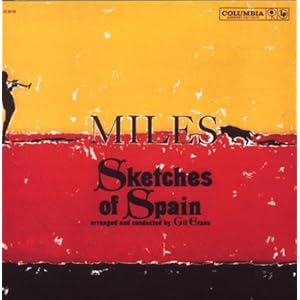
From Wikipedia: The Rolling
Stone Album Guide calls it “a work of unparalleled grace and lyricism.”
In 2003, the album was ranked number 356 on Rolling Stone’s list of the 500 greatest albums of all time.
I call it virtually impossible to
leave playing for five minutes.
For me to say that any music is
unlistenable is quite the achievement on the part of the composer, arranger,
conductor, and musicians. With few exceptions I can sit through just about
anything.
Exceptions: Opera and Led Zeppelin,
both of which I’ve always lumped in the same category — they’re great until the
singing starts.
I’d heard thatUlysses was one of the
great unread novels of all time, the kind of literature that people like to say
they’ve plowed through in order to impress other people, but which no one has
actually read from beginning to end.
Maybe that wasFinnegans Wake. Or Pynchon’sGravity’s Rainbow.
My Boyz (as opposed to my sons)
were dragged with me through elements of my Ulysseswork, whether they wanted to be or
not.
[First, let me say that my Boyz are
vastly, vastly better educated and well-read than I am. Giants and geniuses
all.]
Beast told Scooter, “You should
read it. It’s not that difficult (no more so than Absalom Absalom or Gravity’s
Rainbow).”
Strongboy piped in, “I tried [Gravity’s Rainbow] recently and couldn’t
locate a major plot—or a minor one—by about page 50 and aborted. I like
to be challenged as a reader, but a little positive reinforcement for the effort
would be nice, too.”
Paisan, resident polymath, responded
quickly, “One plot starts at the White
Visitation, where the behaviorist Pointsman is studying Tyrone Slothrop because
he gets a hard-on and screws a British gal BEFORE the V2 rockets hit that London
locale (they are silent, traveling faster than the speed of sound). Response,
THEN stimulus. Of course, there is Roger Mexico, also at the WV, plotting
V2 hits according to the Poisson distribution; as Pointsman dwells in the Zero
and the One, Mexico lives everywhere in between, in probabilities. There
are three other major plots (involving the suicide of Herero tribe, a German
chemist, a Russian and the Kirgiz lights)—‘any one of which would have enhanced
the status of every novelist writing in English,’ according to the NYT review.”
I
love my Boyz. Paisan can hold the floor for hours on the Civil War,
Shakespeare, baseball, statistics, Pynchon, politics, city planning, and
probably half a dozen other topics I can’t even imagine. And that’s without anything
to lube his delivery.
Trust
me, Paisan needs nothing to lube his delivery. And it’s always well informed
and hilarious.
When I knew Ulysses
was coming in, I’d committed myself to read the novel first, and then the front
and back matter. The front matter introduces the novel, discussing its
construction, themes, and publication history. The back matter presents the
explanatory notes, the semiofficial errata sheets, and 200-some-odd pages of
some of the most soul-numbing proofreading I’ve ever done, because of the
quality of the scan, not the nature of the material.
And when I say “soul-numbing proofreading,” that’s an area
with which I’m well familiar. I spent the first 17 months out of college
proofreading airline timetables and lottery and scratch-off tickets—one of the
most enjoyable and, in retrospect, perhaps simplest times of my life. Ah, the Helen
Estates, and Atlanta before it went nuts.
Anyway.
I read Ulysses
front to back, with the exception of the play chapter, which was far too frustrating
from a bad-scan perspective to continue, and I needed at that time, as
Strongboy said, some positive reinforcement. After that chapter, the
proofreading was easy, especially Molly’s rant at the end. Then I went back and
finished the play chapter, which ended up containing my favorite character in
the book, a progressively drunker military type who is the prototype for the
kind of folks who really groove on Lee Greenwood’s “Proud to Be an American.”
My thinking as page gave way to page was that Joyce didn’t
really care about the reader. Joyce cared about Joyce. Joyce cared about
showing folks how clever he was, and how he could write in any genre (not all
equally well, in my mind, but some damn good). Joyce was more intent on the
structure and the detail and the variety of his styles than in presenting a
story that anyone would, could, or should follow.
Sometimes when I’m returning a manuscript, I’ll tell the
author what an accomplishment the work was. I’m always sincere about that
statement, and it occasionally is uttered when I’ve just read a very good book.
But sometimes that statement is coded language for, “I’m happy for you and your
career that you’ve devoted so much time to this incredibly arcane topic, but in
the long run, you’ve just spent the last ten years of your life creating a
beautifully packaged doorstop that should function for years to come.”
And maybe I’m displaying my own ignorance here, and I never
mind doing that. It’s how I learn, when I have an open mind to do so. Hilarious
to me are comments that people make about Citizen
Kane: “It’s all clichés.” No, dummy. It created the form. Some dude who
ended up being a caricature in his later years was a Boy Genius who invented
whole new worlds of filmmaking and storytelling when he was twenty-six years
old.
I guess I’m opening myself up to, “Hey, Dummy.”
But reading the front matter for the Oxford World’s
Classics edition of the 1922 printing confirmed my general impressions.
Joyce, after meeting only with meager publishing success to
that point, went on to attempt this master work of Ulysses. But along the way, he goosed interest in the developing
manuscript by letting people know how the book should be interpreted. Nearing
publication and a little thereafter, he gave two different folks schemata of
the book, indicating its links to the Odyssey,
somewhat to Hamlet, what genres each
section of the book paired up with, what colors, what body parts and functions,
what times of day, and so on.
Somewhere in the notes, the editor of this edition—obviously
no slouch in the brains department—stated that without Joyce’s assistance, it’s
unlikely that folks would have made any connection between Ulysses and the Odyssey,
much less Hamlet.
And there’s more than a little of the following mind-set involved
for the readers, too:
Joyce not only gave the world a new way to look at novels;
he gave the world a particular piece of work and enough semi-informative and
occasionally contradictory data to goose enough critical interest in this book to
last forever, obviously.
Some of Ulysses is
beautiful. It’s all challenging. It’s an amazing accomplishment. But Joyce’s
greater accomplishment still, as far as I’m concerned, was in marketing.
No one needed schema to figure out Citizen Kane. And did Joyce really have all that stuff in mind before he wrote the damn thing? Call me skeptical.
A book designer and I have worked together for years, occasionally contentiously, but I think that often came from the stress of dealing with mutual clients who really have no idea what they're doing. And that's OK; we're professionals with decades of experience doing this kind of work, and they are not.
One book series we worked on, or tried to, came from an author who didn't understand that most good books have a story -- you know, a beginning, a middle, and an end. When things work out really nicely, even individual chapters read that way.
This author would include so many sidebars and boxes and pull quotes and illustrations that determining the actual theme of the book became damn near impossible. As a copyeditor, that's a problem for me, because part of my job is coding the text: instructing the designer how each element of the book should be treated. When a chapter is 75 percent non-body-text, it's a sign of bad organization.
As much as my book designer pal and I tried to explain it to the author, the concept never really seemed to sink in.
Another problem is that this author is the type who wants to sit down with a designer and create each page to accommodate all the switches and turns. That might have been OK decades ago. No one has the time anymore. It's an age of specialists. And if you're an author reading this, take away this one fact: In a perfect world, the person designing your book should never have to read a word of it, nor care in the least what the book is about. The text should arrive at the designer's coded and ready to go.
And here's a little secret, too: I don't really care what your book is about either. When an author asks if I want to know what a project is about, I'll generally say, "It doesn't really matter, but if you want to tell me, go ahead."
What's my point? I have a few.
A. I'm too busy to be writing this blog entry. But I'm avoiding a very particular project. Why am I avoiding that project? Because it involves me getting down and dirty with artwork. Czar don't do artwork -- at least not with a smile on my face. But I know that once I get started, it'll be easy and I won't dread it next time . . . that is, unless I wait for the muscle memory to fade.
B. If you came here expecting the further tales of Ulysses, it's going to have to wait. I might just go Raoul Duke and start repurposing emails I sent during the course of the project to some of my pals. It's a story that must be told, because it informs much of what I do. That is, how do I approach a stack of paper when my goal is reaching the bottom of that stack of paper in the most efficient manner, regardless of its content?
For example, I just finished working on a collection of short stories and poems -- the kind of stuff I studiously avoid in the New Yorker, because fiction and poetry ain't my bag. But what do I do when I'm in the middle of a really intense short story and I don't want to turn the page because I'm already emotional as hell and living on the edge, and nothing at all can send me into weeping spasms? I was reading one story in particular, and I was in good page-turning, moneymaking mode, and I got to a point where I didn't want to know what was going to happen next -- because I didn't know how my fragile psyche would respond.
That's a good story. My usual metric for whether I like the fiction (novels) I'm paid to read is if I care about what happens to the characters by about 30 pages into the manuscript. In a short story, though, that number of pages is vastly compressed.
Frankly, I never had that feeling about Ulysses. But I personally don't think that Joyce's book was designed to make readers care about those characters either. Maybe I'm wrong.
C. I've said this three times today to different people: Anyone who is good at what they do seems absolutely exhausted these days. And the exhaustion just seems to attract more work. There's really no way out.
Trying to do a week's worth of work in a day, so not much time for a post. I don't feel right leaving that haiku stuff up too long, especially as it spills into another Haiku Monday -- which, if you're playing at home, is available at Fishy's fine pond this week.
In the meantime, I offer an email I just sent to a managing editor, one who fears showing up in this column of the blog. But that's what she gets for loading me down with crazy, though remunerative, deadlines.
Ah, the power of the virtual press.
***
Just a few to get your heart started. And this is a second edition, huh?
page 36, line 2: uppercase bible.
page 39: Hitler's first name was Adolf. Adolph's is a brand of meat tenderizer.
page 42: period at end of paragraph.
page 48: you can't elide digits on BCE numbers, for very obvious reasons.
page 51: with the script, it's a little hard to discern, but I'm about 99 percent sure that seder plate is upside down. the three-letter word on the plate is the Hebrew pesach, and it should read correctly in the photo
Good thing I'm not reading this book too carefully.
It’s been a long time since I’ve hosted, and I’m going to
echo what previous hosts have been saying lately: More and more of the
enjoyment from this weekly parade comes from seeing what people whose personalities we know do with a topic — or do at all — rather than the actual execution.
Too, as Woody Allen or Albert Einstein or Yogi Berra said, “Ninety
percent of life is showing up.”
The return of Fleur. Chickory breaking her hiatus. (Thanks
to you both.) Aunty, Aunty, Aunty . . . was your finger hovering over the Publish
key, waiting for 11:59pm to strike? Priceless. And Kristen, thanks to you, too,
for joining us for recess. It seems that no one has time for HM, but here we
are again.
Thanks to all for meeting the deadline. Delivering this blog
posting might be the only deadline I make all week.
[What’s my life been like? Let’s just say that 19-hour
workdays, not eating, and an inability to achieve any kind of deep sleep (but
waking up drenched in sweat) is a wonderful weight-loss plan.]
So, yeah, it’s as much about the people as the poetry; the
collective wisdom of what people have to say about a topic is so damn instructive.
* * *
My takeaway from this week’s entries is that unless you’re
very young or not human at all, play (as a verb) comes fraught with peril and
maybe pain — from Fleur’s hard landing to Serendipity’s preseason march (and
the forecast of pain for lugging the beast back to camp) to Becca’s incredibly ominous
“be careful where you bleed” to Rafa baring his “charms.” CoreyJo addresses the
addiction aspect of HM, and even good addictions can be intrusive. (Czar to
self: Get to work! It’s already 5:30am!
You’ve been up two hours and haven’t turned a billable page yet!)
And bad addictions, which typically start out as play? Don’t
get me started.
So, who can enjoy relatively unfettered play? Shadows and
trees (Grins); squealing cousins in summertime
(Fishy); grasshoppers (Chickory); ravens and martins (Serendipity and Kristen,
respectively).
Caveat: Even — or
especially — childhood play can come with its bumps and bruises, as Fleur
attests. And here’s where knowing the players (oops!) gets interesting. If
someone else, some unknown, had submitted Fleur’s entry . . . fine. But knowing
Fleur’s haiku history, is it possible to read about two people in joyous
rhythm, then with a sudden end, as anything but metaphor?
* * *
I’ve mentioned that my son is an actor, so when I hear the
word “play” these days, my mind goes to the stage, and I’ve experienced far
greater catharsis in a theatre’s setting than just about anywhere else. Plays are
about conflict. No conflict, no play (or at least not a very good one).
Conflict? You want conflict? Where else but this crowd can a
host throw out the word “play” and the first three submitted words are “a
nuclear war,” and it’s right on topic (Karl)?
Catharsis? Becca addresses the tears in the ultimate final
scene — but what really nailed me with Becca’s verse is that, as any member of
my family will tell you, at some point at every play I cry (if not empty the
tear ducts). It’s the emotion of live performance, the joy of seeing something
done well, sometimes even the content of the play itself (or now, seeing my son
on stage living his dream [I’m crying as I type; yes, I am]).
I cried (finally) at my mother's funeral, but nowhere near as hard as I've cried in a theatre. And, as part of czar family lore, I remember hearing that my mother was so overwhelmed at seeing Camelot on Broadway back in the early to mid-60s that she needed to be carried from the theatre.
The most cathartic moment ever in a theatre for me was watching my younger (nonactor) son, as a high school sophomore, as Pippin — for a million
reasons. If I had time, and if you had time, I’d tell you the tale. But, as I've learned this week through all of you, the reality of "play" in any of its forms can be a bit brutal. (And knowing what my parents' marriage was turning out to be at that time, I suspect ma czar was carrying more than a little emotion in with her, as was I at Pippin.)
Play can be hard. Look at Jon’s words: “screaming,” “unmerciful
hammering.” And how much pain went into being able to play like that? (Oops, I’m
back to verbs. I’m off the clock. So shoot me.)
* * *
Parting comments:
“Childhood’s popsicle”: Great, Grins.
“The fountain of youth”: Chickory, the czarina told me the
other day that she saw a cartoon of a man at a fork in the road with two signs.
One said “Fountain of Youth”; the other said “Bacon.” Now, that’s a tough
choice. But if I’m reading you right, obligations lead straight to the grave.
Wow. And I agree entirely.
“Twirling laughter sky”: Love it, Kristen. Always the kind
of phrase that seems to grab the host’s attention.
* * *
I need to wrap this up. Even facing a 19-hour day, I can
avoid work with the best of them.
* * *
A friend has written and directed a new play, which will be
performed this week at the New York Fringe Festival (Fleur, you should go see
it; if you’re interested, I’ll get details). But the apparent theme of the play
(which I’d never pick up on, because my friend’s IQ is about 80 points higher
than mine) is that we become what we fear.
I’ve never been playful in any traditional sense of the word.
Ever. Not in the hopping-skipping-jumping-fancy free sense. But that’s what immediately
comes to mind when I hear the word.
Maybe I fear the verb “play.” And maybe my fear went out over the series of tubes. Because what I’m
learning from these entries is that, for everyone, play isn’t as playful as it sounds. As a
verb, it often involves some pain. As a noun: catharsis, war, death.
Unless you’re damn, damn lucky.
* * *
Oh. Did someone win this week? Yeah. That would be Fishy with her seventeen-syllable evocation of the Bard's A Midsummer Night's Dream:
B’neath light of moon
Oberon’s mischief reveals
William’s Summer farce
Thanks, everybody. I wish I could write this stuff all day. Or sleep and eat. Or do anything else but what the rest of the day holds in store. Like play . . . although now I'm not so sure.
I have no idea what I’m doing here — in the winner’s
position.
I think the incomparable RafaDe granted me a Haiku Monday achievement/participation award -- like the ribbon you give at summer's end for the camper who
showed up every day, had enough grit to finish the race every time, but never
really had a chance in hell of beating the kids who clearly could run faster
and jump higher.
Thus, I’m viewing this week’s hosting of Haiku Monday as receiving
the poetic equivalent of a pity f—, to segue from Rafa’s parting imagery. (If
you know that term, okay. If not, don’t worry about it.)
And you know what? I’ll take it.
Rafa is, after all, the host with the most post, or
something like that. And I must say that of all the haikuers, Rafa somehow seems to get me, for what it’s worth. I’m not sure if that’s worse for me or him. After
introducing my dear friend Fleur to this mess, who seemed to revel each week in
letting the others know just how inappropriate my submission was . .
. well, as Warren G. Harding said, “My friends . . . my god-damn friends.” Maybe it's best I stick with people who don't know me too well.
You can look up that Harding quote, by the way. It's real.
Damn, off-track already. Or maybe not. I’m just playing
around.
***
This week’s word is play. Many places to go with it. As a
verb, it’s never had much play for me. As a noun, the word now plays out with a
revitalized meaning in my life.
Visuals. Sure, if you want. I’ll be honest: They won’t help
you win, but they won’t hurt you either. If that makes me a bad guy, I can live
with it.
5-7-5. I’m strict. And I may or may not request a correction for an entry that's off-count. Depends on time and mood. The syllables are your responsibility. Really, it's the only rule to follow, other than the deadline. You can do it. I'm sure of it.
Content. Whatever — as long as it relates in some way to play.
And that’s a mighty wide berth.
Number. Post as many as you want, but only the first two are
for judging. Put them in the comments section below.
Deadline: 12:01am, Tuesday, EDT.
Host’s promise: A winner announced on Tuesday, following the
instructions of the judge in William Burroughs’s Naked Lunch: "Be just, and if
you can’t be just, be arbitrary."
Except for a three-and-a-half-year break when I was in
college, I’ve been proofreading one way or the other since I was 14 years old.
I’m 52 now. Seen a lot of stuff. The progression has been more or less orderly.
I also copyedit and index, but proofreading’s the one whut
brung me.
My older son is an actor, just out of college, and as of the
beginning of this summer had a year’s worth of paying acting work ahead of him.
(Hallelujah.) I spoke with him a few days ago and asked, “Do you enjoy it now?
The routine of the work and the rhythm of the day? It’s different doing a show
30 times instead of five, and rehearsing three or four other things at the same
time. Are you enjoying it? Can you see yourself doing it for many years to
come?”
His answer was an unequivocal yes, and I can understand it.
My first job out of college was proofreading airline timetables and lottery
tickets. Sometimes 12 hours a day, seven days a week. Once went 42 days without
a day off.
Of course, that’s my life now, but it’s different having an
employer say, “No weekend this weekend, and oh, by the way, 12-hour days.” And
that’s about how it went down. Fait accompli.
It's also a little different when you're 21 years old without a responsibility in the world.
Anyway, I finally left the company, but my next job was another proofreading
gig, and every job since has had an element of proofreading in there. I
obviously enjoy the work and figured I’d seen about everything in the last
four decades.
* * *
I’m going to deviate from this blog’s norm for this coming
series of entries by naming company, author, and title. As Finnley Wren
said, “I didn’t mean to bring this up again. You’ll forgive the reference? It’s
an intrinsic part of the story.”
Some months back, Oxford University Press contacted me to
help in producing an ebook of the Oxford World’s Classics edition of the 1922
text of James Joyce’s Ulysses.
I thought reading Ulysses
would be enough of a challenge, much less proofreading it. I’d heard about it
all my life as one of the great unread pieces of literature -- unread because
of its difficulty.
But I have to read
it. Difficulty is no more of an issue than for books of systematic theology I
indexed in which I barely understood a word. The work must be done.
What are the rules for this game? Make three Word files
created from scans of a printed volume match every single jot and tittle in an acknowledged
world masterpiece, along with 50 pages of introductory matter and 250 pages of
explanatory notes.
The 1922 Shakespeare and Co. edition of Ulysses has about 4,000 known errors (typographical, factual,
intentional, unintentional), all of which need to remain in the book.
Thus, the task is to make an electronic file match a printed
book exactly. The goal is a one-to-one reproduction of 980 pages, from a
troublesome scan resulting from small type, italics, and 90-year-old
Continental typesetting standards that probably did not match the author’s
intent, as subsequent editions showed. The job is not to put out the best or
the most authoritative version of Ulysses;
the job is to create an electronic version of an existing book.
And it’s James Joyce’s Ulysses, for god’s sake. Even if it’s
exactly right, it might not be exactly right. And it's being done for Oxford University Press. While I treat every job that comes across my desk the same, I'd be lying if I didn't say this one came with a bit of a higher expectation than most.
Long way from airline timetables and McDonald's scratch-off games. And I thought the novel
would be the hard part of the project.
No way. Here’s a marked-up page of the explanatory notes, and it's not the worst, only the most quickly available.
After living with this beast for the better part of the last three weeks, I'd almost like to say what Jon Voight said to Ned Beatty at the end of Deliverance: "Maybe it's best we don't see each other for a while."
A friend once uttered, "It is a wise man who every day learns something new to fear."
I sent him the following quote the other day, from a book I've been working on:
What did he fear?
The commital of homicide or suicide during sleep by an aberration of the light of reason, the incommensurable categorical intelligence situated in the cerebral convolutions.
An email from him earlier today:
Today I woke up fearing that the text of the most sacred work in Modernism is ensconced in Bod's capable, yet conspiratorial hands.
Somewhere on this Sunday, it's my brother's fifty-seventh birthday. I suspect he will spend his day as I will spend mine -- in heavy editorial pursuit, attempting to keep other demons at bay. In my brother's case I have no idea what those demons are, but I guarantee you they are there.
Below is perhaps the only surviving photo of my brother and me in our youth -- maybe even the only such photo ever taken. (That's how we roll.) You will note the Mr. Natural poster on the wall. If I had to date this image, I'd say late August 1972.
I'm working on the history of a venerable Catholic school in a bordering state, and I'm wondering if "Catholic girls, cute" is a viable entry. I would promise to index only those who appear to be over eighteen.
That plaid takes me back to the NYC public buses on Staten Island, and the girls who would hop on for a few stops. Back in 5th-7th grades or so. With the wonderful bus pass, you could get into the transit system all day long for a nickel. Early 1970s.
Maybe after a certain time, the uniforms were no longer so obvious, or the girls found other means of transportation.
Forty-five minutes on the bus (this is exactly what they looked like),
then about a three-quarter-mile walk through city streets (caveat emptor: this is Park Slope, but it could pass for parts of Bay Ridge; I'm lazy)
and then duck ponds and past one mean-ass rooster. In Brooklyn. (Yes, this photo is of the school I attended from 1969 to 1977. Not a thing has changed, except that little structure off to the left wasn't there.)
You know, those were definitely not the days. But this was my commute for seven years, except for the short time when Ma Czar was teaching in the South Bronx and would give us a ride to school. Teaching 13-year-old third-graders, and needing an escort to go to her car.
Not the days.
And I don't know why the Catholic girls didn't return my stares.
UPDATE: In a weird bit of synchronicity, and there's been a lot lately, one of the boldfaced folks in my Brushes with Fame took the 2010 photo of my school's duck pond.
We then engaged Ed Thompson, who did a masterful job of translating the document into English, and Bod Land, who performed the editorial tasks to make it sing.
Funny thing is, I saw this typo at indexing stage (it had been correct earlier) and pointed it out. Supposedly the error was corrected before the file was sent to the printer. Some things are just meant to be.
I’ve
been wanting to write two posts for quite a while, and I’ve figured out a way
to combine them. Now if I can just write.
The
issues deal with authors providing proper guides through their books. Such
guides come in different forms.
1.
Author/date citations. Authors, take note: An author/date citation (e.g., Jones
2009) is intended to, and must do no more than, provide a marker to an exact
place in a properly compiled Works Cited list, or maybe a References list, if no
other Jones 2009 appears. As a copyeditor or proofreader, I don’t want any
other information except author and date, except a page number for a quote or “emphasis
added” if the author feels the need to alter the cited copy. If your
reference is to “Hitler 1928,” and that happens to take me to Bernard Hitler, Now I Am a Fountain Pen: The Story of My Bar Mitzvah (Flatbush, NY:
Gravesend Press, 1928), so be it. No explanation required. The sole requirement is that every citation must
have an exact match-up in the list at the end of the book or chapter.
You also can’t
change the names of organizations to suit your purposes. The name in the
references list is the name in your chapter in the citation— unless you tell your readers otherwise. That’s life.
2.
Subheads. Love them, especially as a
proofreader or indexer, and for different reasons. But the copy following the subhead needs to bear some semblance to the
subhead itself. As an indexer, I’m often lured into thinking mistakenly that
the author and editor may actually have known what they were doing when they assigned a
title to a certain section of a chapter . . . only to bring up the matter four pages later into the discussion.
The
issue of subheads brings up organization in general. I’ve mentioned this gripe before, but it happens weekly. I don’t want to be 200 pages into a book and
read repeatedly what points the book is going to make or is trying to make. To
me, it puts the author in the way between me and the content. If I want a
first-person account, I’ll read one.
[This
morning I picked up a book that my wife had left in the kitchen. I held it up
to the dog and said, “Zooey, people read these things for pleasure. Can you imagine?” My mind is turning to mush.]
So,
as an indexer, I don’t want to see subheads that introduce four pages of
transition material and never mention the actual topic — unless I figure out
your game early on, which unfortunately I never do soon enough.
Tired of looking at the old entry, and no time to compose anything coherent. If printed books are dead, no one bothered to tell my publishers.
So, forthwith are posts that I had in waiting. I'm tired of looking at them, too. If they no longer make any sense, well, I've had a few other entries like that as well.
* * *
CreateSpace: Garbage In,
Garbage Out
6/2/2012: In full disclosure, I wrote this rather hastily some weeks back. Would someone who actually knows please tell me the story: Does CreateSpace ever typeset copy for a book's pages? Or do they simply print what the author/customer supplies . . . PDF, Word doc, whatever? Is there ever any human contact? Do they provide a good service? I was just ranting here . . . to a degree.
If you're a self-publishing author and you don't know how to
format your manuscript properly, your book is going to look like absolute crap
when you get it back from Amazon's CreateSpace . . . unless CreateSpace has
different levels of service, and one of them actually gives a darn what your
book looks like as Amazon taps your bank account.
My two experiences
with CreateSpace page proofs show that the folks at CreateSpace setexactly what the customer sent in.
Maybe that's all they do. In some circles, that would be called "customer
service." In my world, that's called "revenge."
To all
self-publishers or ghostwriters working with same: For a very nominal fee, I
can clean up a manuscript so that your page proofs will look, well, like a book
when it's designed. And I can pretty much guarantee that my charge up front
will be a hell of a lot less than what Amazon will charge you for typesetting
corrections after the fact -- if they even perform that service.
And itwillbe worth it. Because unless you
know what you're doing, and without that kind of intervention, your labor of
love is not going to look like any other book on your shelf -- and I'm not
saying that in a good way.
Many writers,
frankly, just care about the cover and the spine. Author's name and title and,
presto, "I'm an author." But if you care what's between the covers,
you really do want it looking as good as possible. You don't want your readers
saying -- and I've heard this -- "The book was prepared so sloppily that I
put it down."
A self-published
book can look as good as any other book in the world. Yes, it can. If you don't
know how to make that happen, people can help you.
I'm one of them.
Shameless plug
over, but that's what this real estate is all about, folks.
* * *
Two Kinds of Writers
Early in my blogging days, I spoke of Bill Shipp, a man who made his bones in
journalism before I learned how to read. When I first worked with him, he had
already written for four decades and was a giant of Georgia journalism by any
metric. He demanded heavy editing. The rare call I received from him usually
dealt with the paucity of my red marks rather than their overuse.
I do some pro bono
work for a nonprofit that likes having its work proofed, edited, torn up --
everyone there, except the executive director. She doesn't want a word of hers
touched. Doesn't matter if it's a point of grammar.Leave it alone.
--
I returned a
manuscript to an author a few weeks ago, and I'll admit -- as I admitted to the
author -- that my customer service was not up to par. And I'll state that here,
just to be fair to the readership. Mostly dealing with turnaround time and
communication. I performed, however, a rather thorough edit.
The author's
comments were very nice, including this remark:
Your
work on my book was excellent and finding you encourages me to write more
and more and more.
Frankly, I can't
think of much higher praise for an editor. That one's a keeper. Even better,
the author writes about interesting stuff. Pinch me.
* * *
Special Onetime Offer:
Legacy Rates
6/2/2012: I actually never got around to the point I wanted to make here, which would have made the headline make sense. Ah, well. It also leaves a blog post in my head. Dammit.
This post is neither a coupon nor an attempt to gather more
clients into the LoD fold, although I never mind doing so. I worked long enough
in the insurance industry to understand spreading the risk.
Rather I'm looking
at a wholesale overhaul of my rate structure for authors -- not publishers --
based on a number of factors, primarily self-publishing and authors writing in
their nonnative language. Nothing against such authors personally, but it makes
no sense to charge them anywhere close to the same as the publishers' rates.
The work is invariably more difficult, requires far more hand-holding, and
takes longer . . . and there's little potential for repeat business, where an
easier project down the line makes things even out.
Too, once a writer
(I'm thinking of one in particular from years ago) knows an editor is going to
clean up a particular editorial issue every time, the writer has no real
incentive to understand what the hell the editor is doing and write it
correctly to begin with -- even a matter of the simplest English composition.
Imagine 2000 pages
of this:
"Why
did the dog eat the biscuit," Ed asked?
Not a 2000-page
manuscript. But five different novels of about 400 pages each. Don't you think
after the first one, where I corrected scores of such constructions, the author
might have learned something? (And this author is old enough to know better and
of such demographics and background that the author is clearly not a stupid
individual.)
When I say
"old enough to know better," I'm talking about some of the great
divides in U.S. education. This author is old enough to have learned the basics
of composition very well. At the time the author grew up, I doubt he could have
made it out of third grade composing a sentence such as the one above.
(Too, people of a
certain age, regardless of native intelligence and barring some mitigating
factors, can read aloud without hesitation. Not universally true with
people under 30.)
* * *
Word of the Day, and Other
Irritants
6/2/2012: I have a longer list on three small pieces of paper. Time to throw them out.
while at the same time
about 38
both (yeah,
"both," thanks to a university press managing editor who scrubbed a
manuscript of every single one before sending it to me for copyediting)
very unique
coteaching with another teacher
* * *
[no title]
6/2/2012: I have no idea why I saved this. I think I liked the part of the sentence that appears after the second em dash.
It is interesting to note the rather Pelagian
character of this soteriology, emphasizing the centrality of human agency over
against the initiation of the divine—particularly salvation by moral emulation—and
therefore providing no real sense whatsoever of how the divine actually enables
the salvation of the nationbeyond merely providing the opportunity.
* * *
A Day in the Bunker
I've referred to it many times before,
whether on the blog or in conversation. Here's a day at the LandonDemand
Intergalactic Corporate HQ:
By the way, I was
raised on this show. I think it showed four times a day in NYC when I was
growing up. Things haven't changed much, except now there's only one bed in the adults' bedroom.
* * *
And this added bonus, from
fall 2009.
6/2/2012: I forget if I posted this exchange. I emailed Moi some version of it. I'd forgotten most of it, but the whole thing still makes me shake my head. "Per" is the gender-neutral pronoun that an author used. I employed it here for a while to maintain gender anonymity. In this case, per is a dude. Now, I don't say "per." I just change the person's gender. Or not.
I'm going to take a page from one of the most offensive yet most
popular Internet sites, the Drudge Report, and break the news here. Anytime
someone tries to put out some dirt on Matt Drudge, he immediately posts the article
on his own site, as if to say, "I got nothing to hide." This is
another way of saying, "The best defense is a good offense."
Yes, indeedy, folks. Far and away my most bizarre client has given
me the heave-ho. I'm not going to get into too many details, to preserve per's
anonymity (I am fair, after all) and thus to preserve my own hide.
Let's just say this: Per is a Bible-thumping prophet (like an
apocalyptic, see-the-future type) and an America-loathing rabble-rouser. Per
foresees the end of America as we know it unless we all come to Christ and
change our ways. I can go on and on about per, as I have come to know per over
the last year or so, but I will let the slightly edited correspondence speak
for itself.
===========
Yes Bob I will send the western union today
although I am not going to pay you for re-editing your own work in chapter 26.
The other day when you ask me, where did I get this copy from. . . I got it
from you. That is the reason why I run everything through you before including
it in the manuscript, so the entire manuscript will have to be re-edited
because it is my opinion you either farmed it out originally or you did not do
such a good job that you have found your own work to be problematic with
errors. I know you by now (not using any gifts of foresight) that you are not
going to re-edit this entire manuscript again, and do it right at no charge,
but in my opinion you should because I have already paid you for it, and even
if you did go through it, it is further my opinion you would not go through it
with a fine tooth comb, so my only option at this point is to hunt for a new
editor and wish you the best. I will send you some money but frankly in my
opinion, I have wasted about [dollar figure here] and the manuscript is not
ready to go to press. Goodbye Bob.
===========
Isn't thisfun?
Here's the response I wanted to send. Special blog exclusive.
===========
First, when I asked, "Where did this come
from?" I'm certain I was referring to a specific piece of text, not an
entire chapter, and how it fit into the surrounding text. I'd need to see the
context for the statement.
On to larger matters:
You've received all the tracked versions of every document you've sent me (all
of which I've kept), so you've seen exactly what I've done along the way -- no
portion at all of which has been farmed out. I don't farm out my work any more
than you farm out your prophecies.
You've had no complaint about the work until now. You've had scores of
opportunities to say that you didn't think my work was up to snuff and to end
our relationship based on the quality of the work you were receiving from me.
I've never heard a single word from you along those lines -- even though you
claim that you've been rereading and rereading the manuscript. If there were
really something seriously wrong, you would have noticed it long before now,
and you would have terminated the relationship long ago. You obviously felt
comfortable enough with my work to continue to send me regular updates for nine
months after editing the original manuscript, and to send me emails asking for
advice, which have always been answered. Along the way, you'd mentioned at
least twice all the money you'd be sending me once the book came out because
you treat well those people who treat you right. Those aren't the actions or
words of an author who is unhappy with the editing.
I can guess at any number of reasons you now no longer want me to work for you,
but I'm not going to try to get into your head.
Every person who is in publishing full time will tell you that copyediting is
part of a process, which includes proofreading as well, and proofreaders often
catch what a copyeditor has missed, especially in a manuscript that at this
point is being slapped together totally haphazardly, with a sentence here and a
sentence there out of context going out for editing. If the manuscript overall
is now not reading the way you want it to, it's largely because of the process
you've undertaken since last November.
I've been getting emails since last November with documents titled things like,
"last change before typesetting" and "one last thing." You
can attribute it to [ . . . ] or your desire to have this book be its best, but
I've worked with any number of folks who also have issues with [ . . . ] and
who want the best for their publication, but who also intuitively understand
what it takes to make a publication its best and how to work with an editor to
bring that about. Your approach to the text of the book at this point is akin
to a dog who keeps digging up a bone and looking for somewhere else to bury it.
You just can't leave it alone, and confusion is the inevitable result. If you
want to blame me for that, that's your decision. The corrections you've been
sending my way have resulted from your claims that you had a better way to say
something, or you've been adding new material (election, Michael Jackson, new
interactions at churches), or you've been qualifying your experiences in [ . .
. ] to make sure you don't land in additional legal trouble. Never have you
said, "I didn't like the way you did this. Please review." Never. Not
once. And that you kept sending me material clearly showed you thought I was
doing something right.
According to your own account, you've gone through photographers, web
designers, cover designers, and editors before me -- blaming them for all the
problems and their inability to do what you want them to do. I'm now added to
the list. Without the gift of foresight, I suspect the pattern will continue
with typesetters, proofreaders, indexers, printers, distributors, bookstore
owners, publicity people, and so on. When I read in your book that you'd been
in 20 car wrecks, 19 of which were not your fault, that about summed it up. And
when I read repeatedly in your book about your lack of faith in the United
States and the American judicial system, yet when I look online and see that
you are constantly in court, asking that very same American judicial system to
clear up your problems for you, I see that I've been dealing with a bundle of
contradictions all the way along.
You are certainly correct that I would not reedit the manuscript again at no
charge. And I'd be wary of vendors who give you rock-bottom rates and claim
decades of experience. I don't think you'll ultimately be happy with their work
either, or you'll find that they'll start charging you for continually making
changes and adjustments (as they should), which will make their original low
price end up not so low in the long run.
You say that this book will come out on God's time and according to God's plan;
if that's the case, then your dealings with me have just been part of a grander
scheme in which you claim to have complete trust. Or maybe it's like the
judicial system: it's something you fall back on when it suits your purposes.
I wish you the best of luck with the book.
Bob
Note that this book remains unpublished. June 2, 2012.
"Observing isn’t the same as seeing. Our own research convinces us that educators do not describe what they see during a classroom observation; rather, they see what they can describe (Brookhart et al., 2011; Moss, 2002)."
That this statement is about educators is immaterial to me. Your assignment is to consider this point and comment:
We don't describe what we see. We see what we can describe.
I
have two sons. One just sat in his last college class today; he graduates in a
few weeks. He has something like 198 credit hours, having needed 128 or so to
graduate. The extra credits came from AP courses and the requirements of his chosen areas of study; he had to stay in school for four years to complete all the
courses for his majors (and minor). So, one about to graduate college. Very proud parents.
Second son is a college
freshman. Financial aid deadlines are nigh, and I required access to his student/institutional account. His log-in information, which I can never
remember and always neglect to write down somewhere sensible, is a random jumble of
letters and punctuation.
Flashback to 1989 and 1992,
respectively. Both my sons were delivered via Cesarean section: scooped out of
the czarina’s swollen belly, cleaned up, and delivered to the czar’s expectant
arms.
Both sons were hyperalert upon
arrival. Heads up, eyes focused, looking around, taking it in. I can brag a
little; both these kids were smart newborns.
Nothing got past them. In the case of one of them, I think more than a little
knowledge came from somewhere else.
Immediately in their father’s
cradle, both boys began to hear the murmur of one of their dad’s favorite
pieces of writing,T. S. Eliot’s “The Love Song of J. Alfred Prufrock.”Too
many great lines to mention. But upon leaving the womb, the first words they heard
other than from medical professionals were as follows:
Let us go then, you and
I, When the evening is spread out against the
sky Like a patient etherized upon a table; Let us go, through certain half-deserted
streets, The muttering retreats Of restless nights in one-night cheap
hotels And sawdust restaurants with
oyster-shells: Streets that follow like a tedious
argument Of insidious intent To lead you to an overwhelming question . . .
Oh, do not ask, “What is it?” Let us go and make our visit.
I ask my
son today for his login information so I can access the financial aid
application.
He writes, “An easy way to
remember it: the first letters of Letusgothen, youandI.”
I suppose there’s something to be said for being in on the ground floor.
This, folks, is the fun of
parenthood—not the inevitably negative and crazy-making buttons that all parents put on
their children. Neuroses, personality quirks . . . all that stuff comes with
the territory, even if they manifest in entirely different ways than in the
parents’ generation.
But my son’s explanation retrospectively gave
a day of thinking about financial aid and taxes a glow, and
that happens—well—never.
I love my children. Very proud
of both of them. I’m way behind in work and dealing with long-forestalled
issues, but what fine moments and ultimately a red-letter day.
This video, a little choppy to turn a nine-minute song into a four-minute one, shows the Nice performing "America" from West Side Story. That's Keith Emerson on organ, before Emerson, Lake, and Palmer.This isn't exactly "Lucky Man": the Nice used to brandish whips on stage, and as this video shows, Keith Emerson had a thing for stabbing his organ with kitchen knives. Freudish interlopers need not apply.
Point of the post: What the hell's going on with "America"?
Rather, a number of my publishers insist on replacing "America/n" with "United States" or "U.S." In scholarly work, especially dealing with international relations, using the actual name of the country is more precise. The more obvious and underlying reason is an emotional one: people throughout the Western Hemisphere are "Americans," but they are not U.S. citizens. They were Americans before there was a United States, no?
I'm liking this approach more and more, although it's sometimes a pain to implement after the fact. But if authors did everything correctly to begin with, copyeditors could mostly fold their tents.
Now I'm trying to sneak in "United States/U.S." on manuscripts.
You do what you can. "No, but for that one starfish . . ." Oh, lord.
What I'd like to get a handle on, now that I have British punctuation all sorted out (see "British as a Second Language"), is what the hell's going on with "Britain"?
Britain
Great Britain
United Kingdom
England
Here's a lesson for you newcomers: One of the best things you can do as a copyeditor is admit your own ignorance and not be afraid to display it to others. Queries get it off your mind and put the responsibility on someone else.
(Frankly, as a copyeditor, proofreader, or indexer -- and this is beside the point entirely -- I'm not paid to do the author's research. If I happen to be sitting at the computer while I'm working on a bibliography, I'll check a publisher's city name or an incongruous date. But I'm not going to spend a bunch of time doing consistency-making based on Internet searches when the author presumably has access to originals.
I will, however, query all day long. Unless the author or publisher just seems ignant.
And I'm also not, as a copyeditor, going to check to see if all the websites mentioned in the manuscript are still live. FYI.)
So, does Britain = Great Britain = United Kingdom = England? I ask because many authors appear to think so. Are the terms entirely interchangeable? Does "Britain" or "Great Britain" ever = "England"? Always? Why or why not? Are dates tied to any of the different terms? And going with the "America" thing, are there cases when "United Kingdom" is used, but it includes people who don't want to be invited to the party? Does "British" = "English"?
I think Publisher's Weekly linked through to the following article, or maybe I saw it on Bloomberg. Doesn't matter. And, as is typically the case, I didn't read every last word. That's how it goes.
I have never downloaded an app, nor, as far as I know, do I own a device on which I could use one. Maybe I could get apps for this laptop PC. I have no idea. That shows pretty much how out of it I am. I'll give up my dumb phone when they pry it from the extensions of my cold, rapidly aging nervous system.
But I read enough of this article to know that it's good news for freelance editors. As is self-publishing. As is any mean, medium, or mode that gets people reading and writing and writing and reading more.
I've not read more than 200 words of a Harry Potter book, probably to a child years ago . . . and I fell asleep before he did. But I'm very happy that J.K. Rowling had people buying books like crazy.
And when she goes to adult fiction, it's not gonna be as crazy, but crazy still.
I met Barbara Kingsolver at a local event in town a few years ago and told her as much: I haven't read a word of what you've written, but boy am I glad people love what you write.
HBO logo, circa 1972
Say 35 years ago you wanted to get into working on sitcoms -- not acting, but tech stuff. Pretty limited outlets for doing so, right? Three networks. What do you have now? Scores of sitcoms on multiple cable channels that the world could do better without. That's not the point. Someone's editing that footage, handling props, doing lighting . . . makeup, gaffers, best boys, key grips, assistant assistant special boom operator UK crew, Japanese yutes to do the anime porn . . .
No, I've never seen any of that stuff either.
The point is that as much as people want to talk about the death of this and the last gasps of that, the form might change, but the function and the desire don't. I've maintained that I don't care if what I work on comes out in ebook format or on stone tablets.
And the more that people are interested in reading and writing, and published works, and sharing what they're reading about, and interested in finding out more about it . . . all this is good for the next generation of freelance editors. If you're in your twenties and you want to be a freelance editor, know that there's plenty of work out there. Your job in your twenties is to begin to find it. Don't be shy. And begin honing your skill.
And a lot of people want to tell their stories in what they consider to be permanent form. That's still a "book." For what it's worth, I still think the go-to item for posterity will be a printed book. Does a digital file really exude warmth? As Aunty said one time (paraphrasing and sans affect), "I bought a book from a used bookstore and saw someone else's little notes and margin jottings. They were delightful. Top that, Kindle."
Even if an app could match it, it wouldn't be the same. Anymore than anime porn is the same as . . . well, never mind.
My yob is to help people and publishers put the written word out there. And the more stuff to put out there, the better it is for the profession.
Still a bachelor, with time to spend with his students outside the classroom, he was a popular teacher and even coached crew. In an enterprising but fruitless effort, he once tried to coach his crew from the air using a tiny airplane and a megaphone, but the engine noise drowned out his instructions. His imaginative failure drew some press attention.*
---
* “Airplane Coaching Fails,” Washington Post, November 7, 1919.
Merriam-Webster's editorial
board: Are you listening?
health care: I’ve been uselessly enforcing this one for too long. One word. Let’s get it over with.
record keeping:
No way should this be two words. I could handle record-keeping. Even better: recordkeeping.
See also child rearing; decision making; etc.
work site:
already in the dictionary: workbag, workbasket, workboat, workbook, workbox, workday, workforce
but work camp, work farm. OK, so I see
the pattern, but I don’t see that it makes sense.
Alfonso starts laughing before he even begins to tell this story.
Back in the 1970s, when lunch hour sometimes included a meal and some alcoholic
refreshments, an employee named Jimmy Erwin was supposed to meet an inspector
at a job site. According to Alfonso—who went up through the ranks as a laborer,
truck driver, foreman, and superintendent—Jimmy decided to stop at a bar across
the street for lunch and proceeded to have a beer or two. His plan was always
to walk back across the street to meet the inspector, but needless to say, Jimmy
lost track of time. When the inspector showed up, he didn’t see Jimmy but he
saw his truck parked at the bar. So he waited another twenty minutes. Finally, Jimmy
came out of the bar, saw the inspector, and walked right over to him, never
skipping a single beat, and yelling, “Don’t EVER order pizza in that place!”